Open Science Journal

Chronological Lab Notebook

Daily logs with notebook pages, experiment photos, and markdown notes.

Decaffifying

Permalink

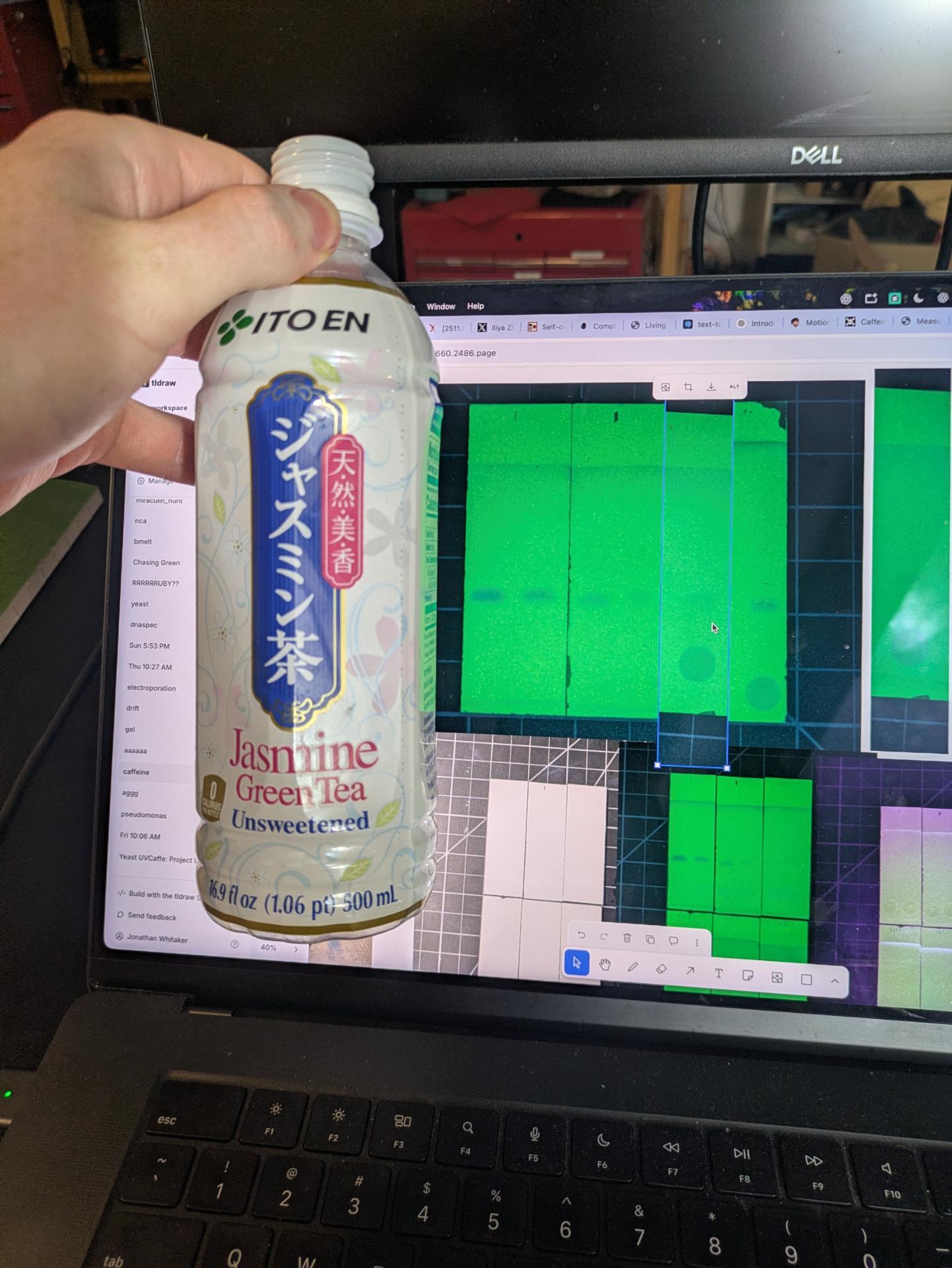
This tweet wondered about a 'decaf pill' to add to drinks. I though about proteins or something that would bind (but you'd need 25g or something), enzymes to break it down (but you'd need to work in hot + acidic conditions and be food safe). But e.g. activated charcoal binds caffeiene, would that work? Test:

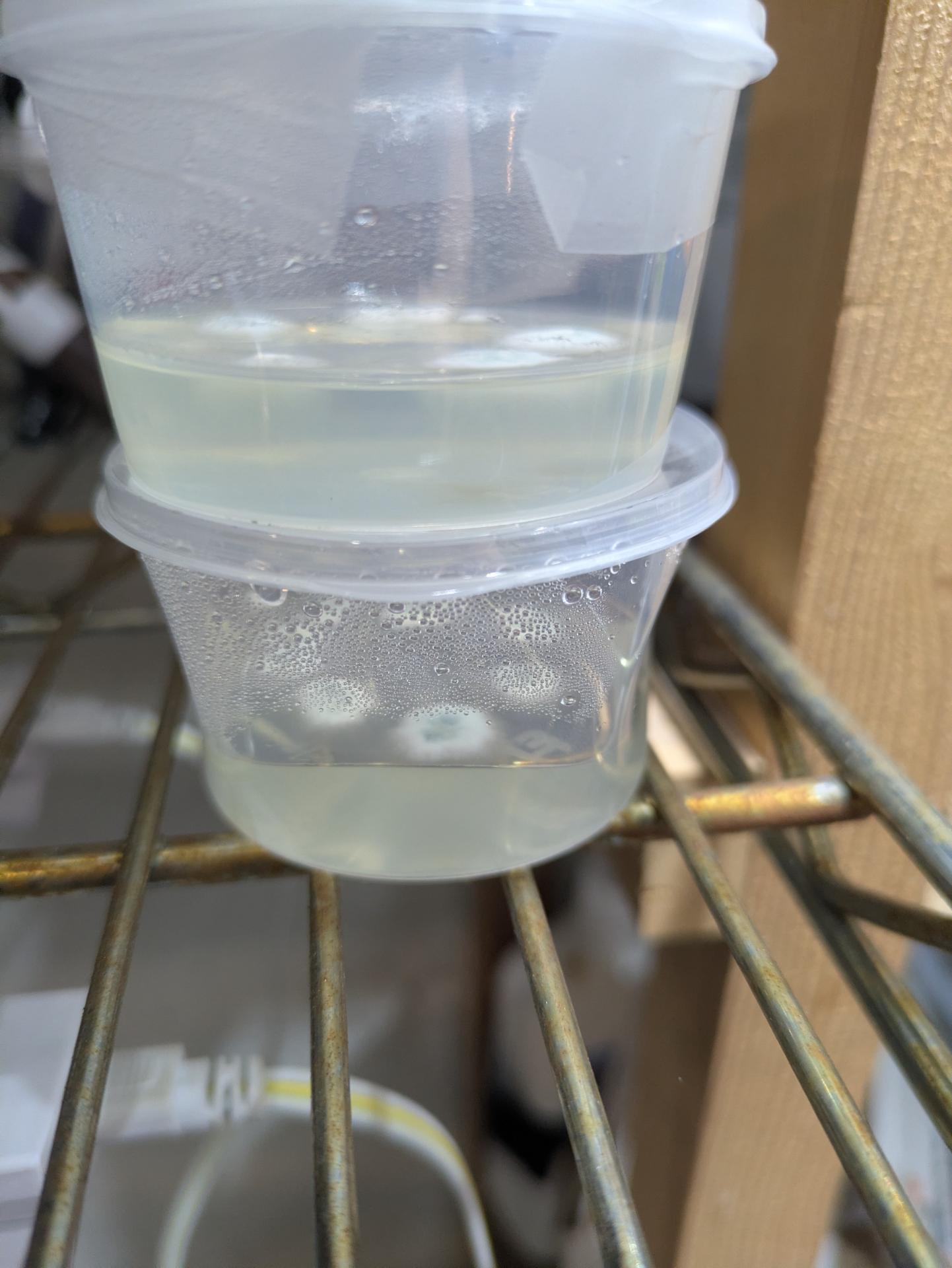
  • Two identical ~80ml portions of instant decaf, with 100mg pure caffeine added (10ml @ 10mg/ml).
  • Coffee filter with activated charcoal bed prepared, briefly washed (not enough, it turns out)
  • One coffee passed through this twice then filtered through a clean filter to get rid of at least some of the charcoal dust
  • re-heated to same temp, small cups used for blind taste test
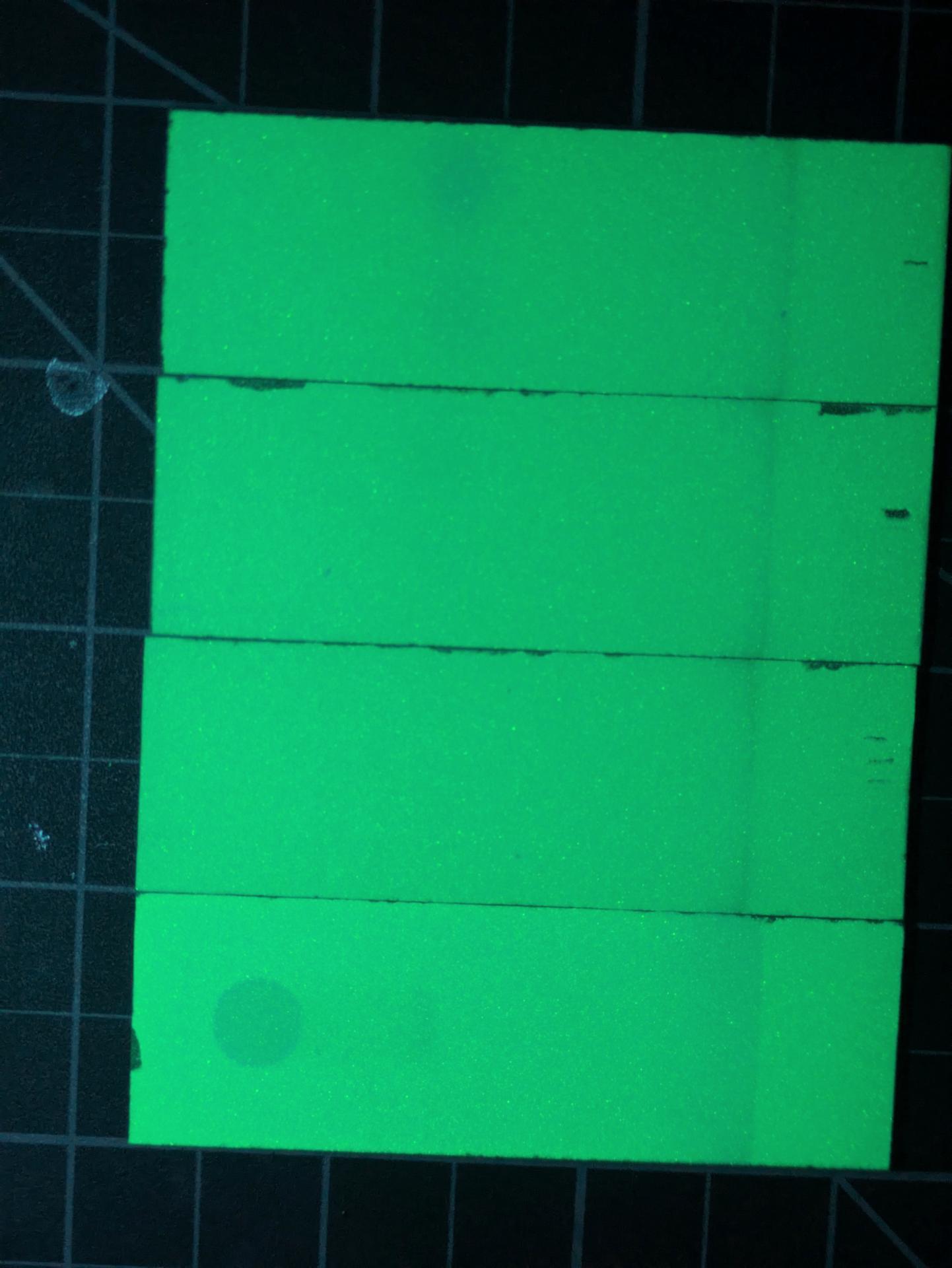
  • 7uL spot on TLC plate of each, run with ethyl acetate, compared to known standards with 254nm illumination

Results: TLC shows a significant reduction in caffeine, but also less polyphenols etc (judging by glow under 356nm UV torch). I found the non-filtered reference unpleasant and bitter, I actually guessed it was the filtered version and something had gone wrong! The filtered 'decaf' version tasted smooth but bland, I preferred it although this is an unrealistic caffeine concentration for coffee and there was no milk etc. (edit: added milk, closer to a tie (both bad)).

I bet you could end up with some kind of tea bag form factor with better washed activated charcoal, that you add to coffee or whatever for a while before drinking. Maybe good in a pinch if the only options are caffeinated and you don't mind a bit of flavour change...
Edit: fitting a quick curve it looks like only 50% reduction, less than I guessed by eyeballing (although likely about as accurate tbh)

Yes it has caffeine

Permalink

I typically consume ~20-40mg caffeine per day in tea I'd guess. Today I'm trying a '5-hour Energy' drink with 230mg of caffeine. TLC confirms it does have tons of the stuff! So far:
- BP/HR spiked to 136/72 and 86bpm soon after drinking it
- Reaction time is worse (308ms peak, 290ms now vs a baseline below 270)
- Typing speed is worse, mostly due to extra errors (say, 15wpm penalty and I don't type particularly fast to start with)
- Beat Saber was interesting - I could maybe react faster, but also recovered worse from errors. Negative overall efffect imo (although it's hard to judge since any introspection distracts!)
- I'm not noticing any strong symptoms besides maybe a slight jitteriness.
(Experiment ongoing when I log this, TODO update)

Tobacco extract TLC

Permalink

Was disposing of a tobacco plant (had been gene gun testing on it). Lightly mashed a few leaf chunks in a little ethanol, to get a bright green extract. Ran a TLC plate with ethyl acetate and a big spot (10+ uL) of the extract. Nothing visible under UV. A few grains of lye and a sprinkle of KMnO4 in water as a stain brought out lovely colors though :) A second run with some ethanol + water added to the EA and a smaller dot gave a streak rather than a nice spot, the plain EA was better.

Not guaranteed the main spot is nicotine but given that it's, what, 1-2% by dry weight of the leaves, soluble in ethanol, seems pretty likely I would guess. r.f. 38mm/46mm = 0.83 ish.

Not recommending replication, if you do, be careful - this is a highly soluble toxin that migrates across skin easily. I was goggled and gloved and less cavalier than usual, and successfully maintained my "have never experienced nicotine" lifetime streak. Leaves, remaining extract etc. were carefully disposed of. I'm documenting this experiment partly since I realised after the fact that scientific curiosity might not be the first motive one might assume if they found evidence of extracting and testing alkaloids haha.

Rainbow

Permalink

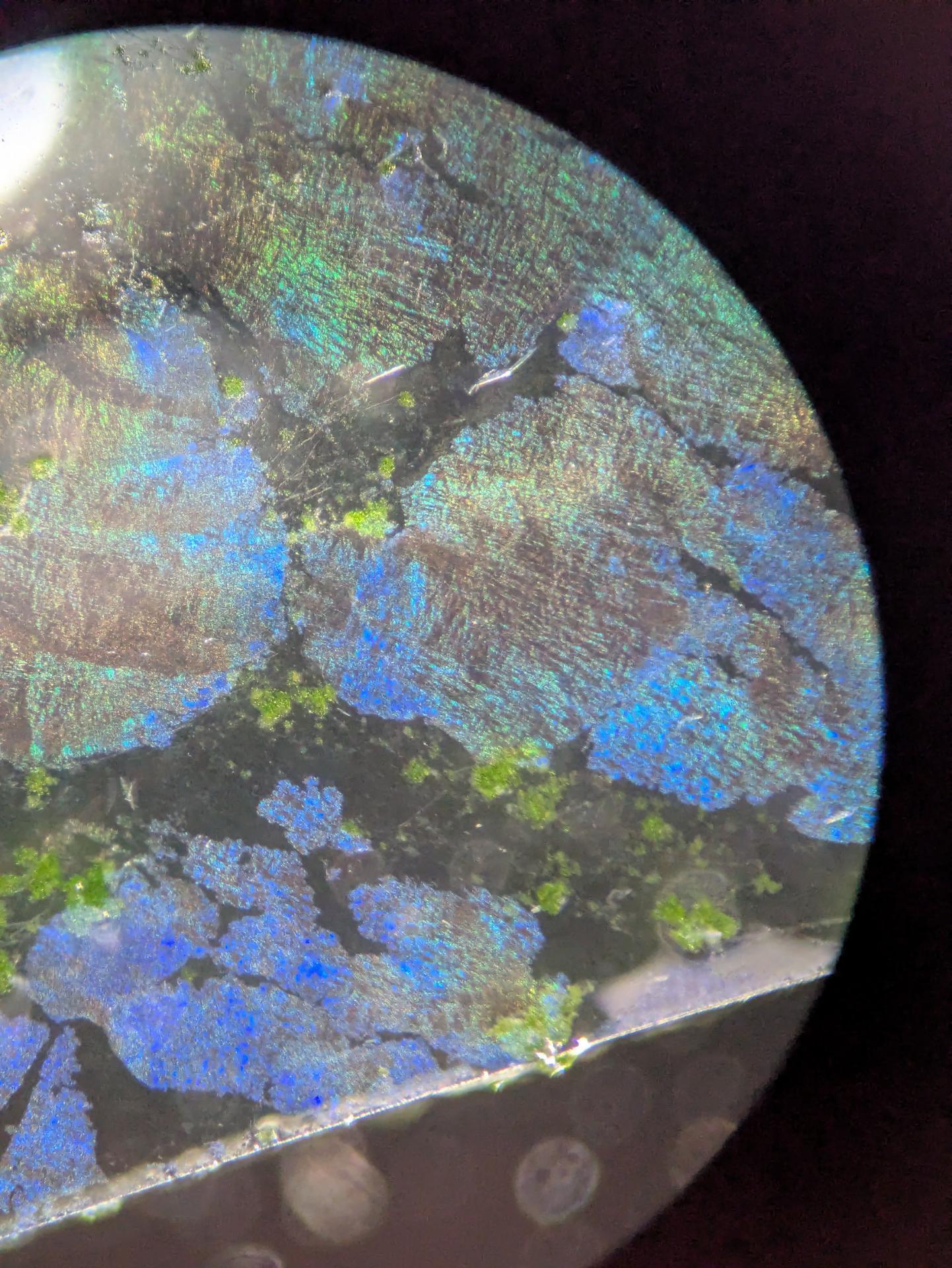
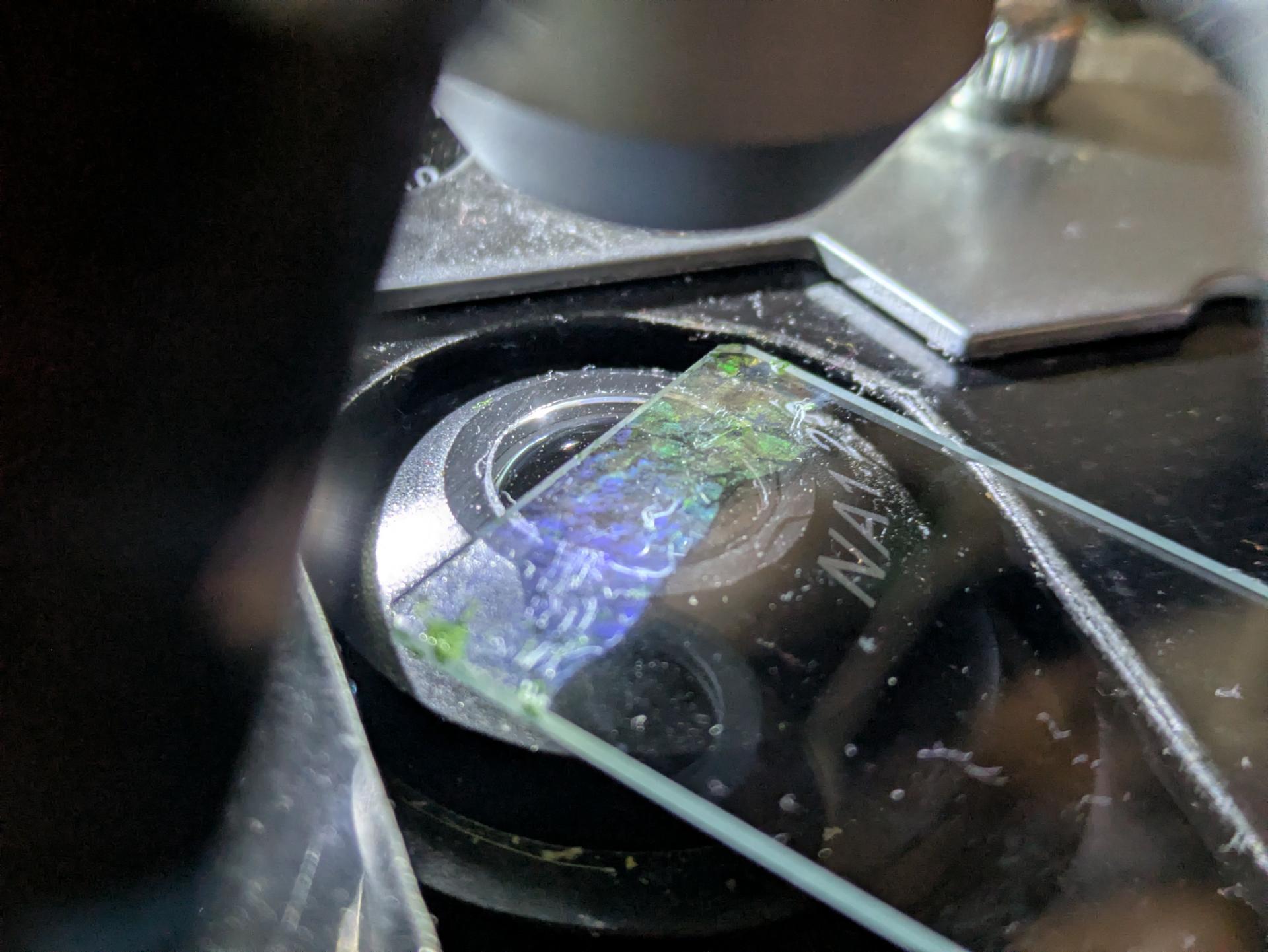
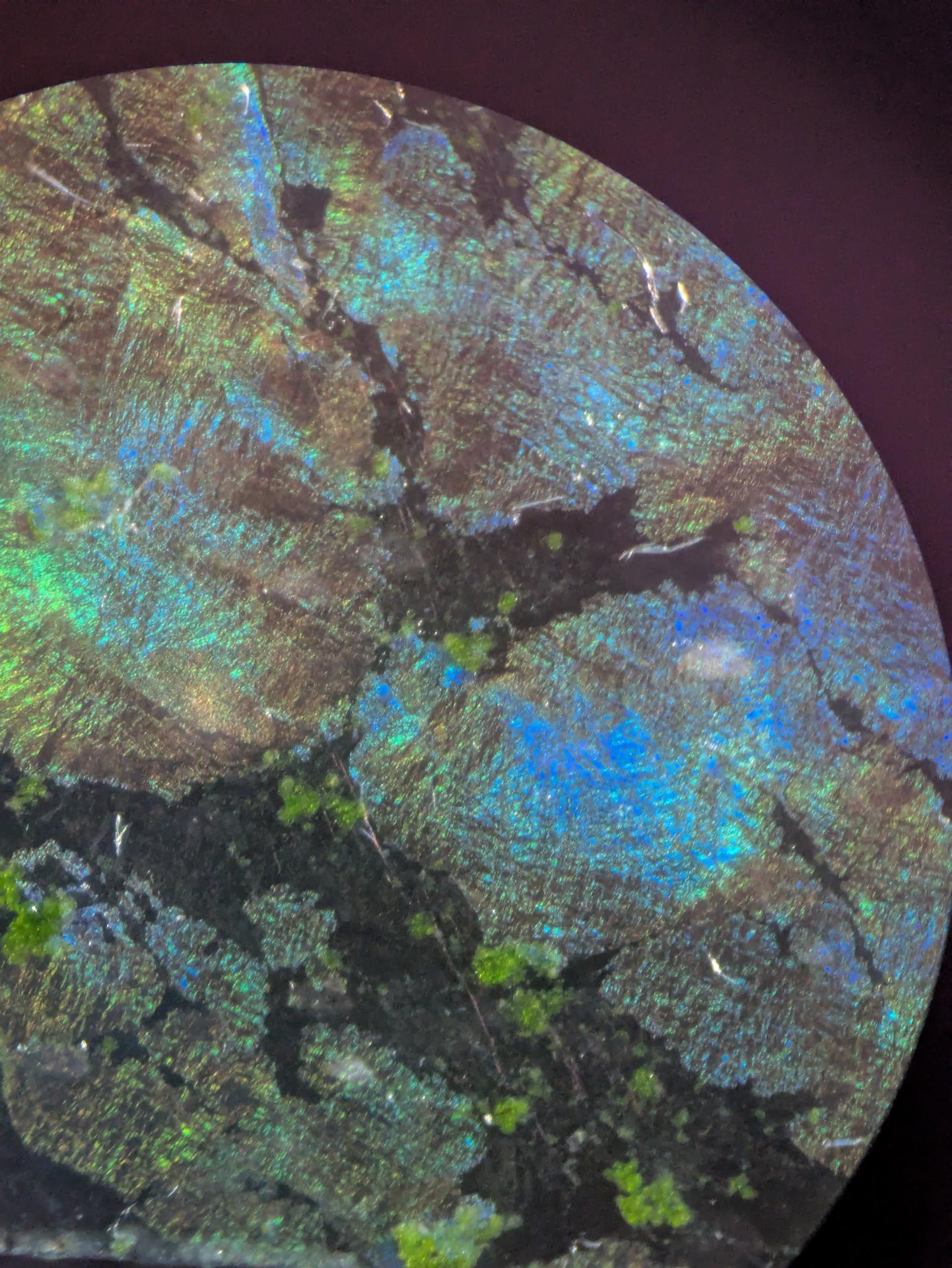
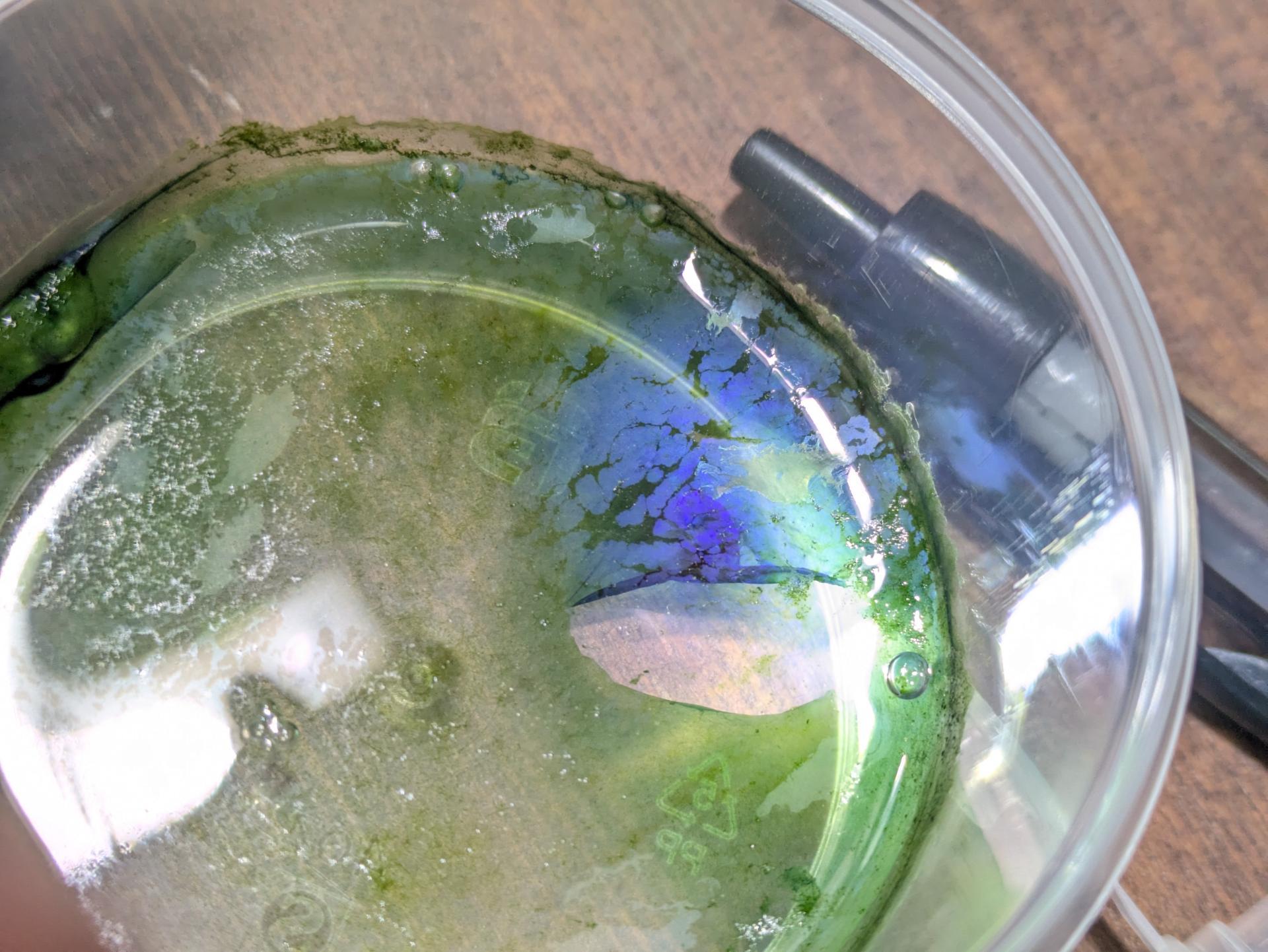
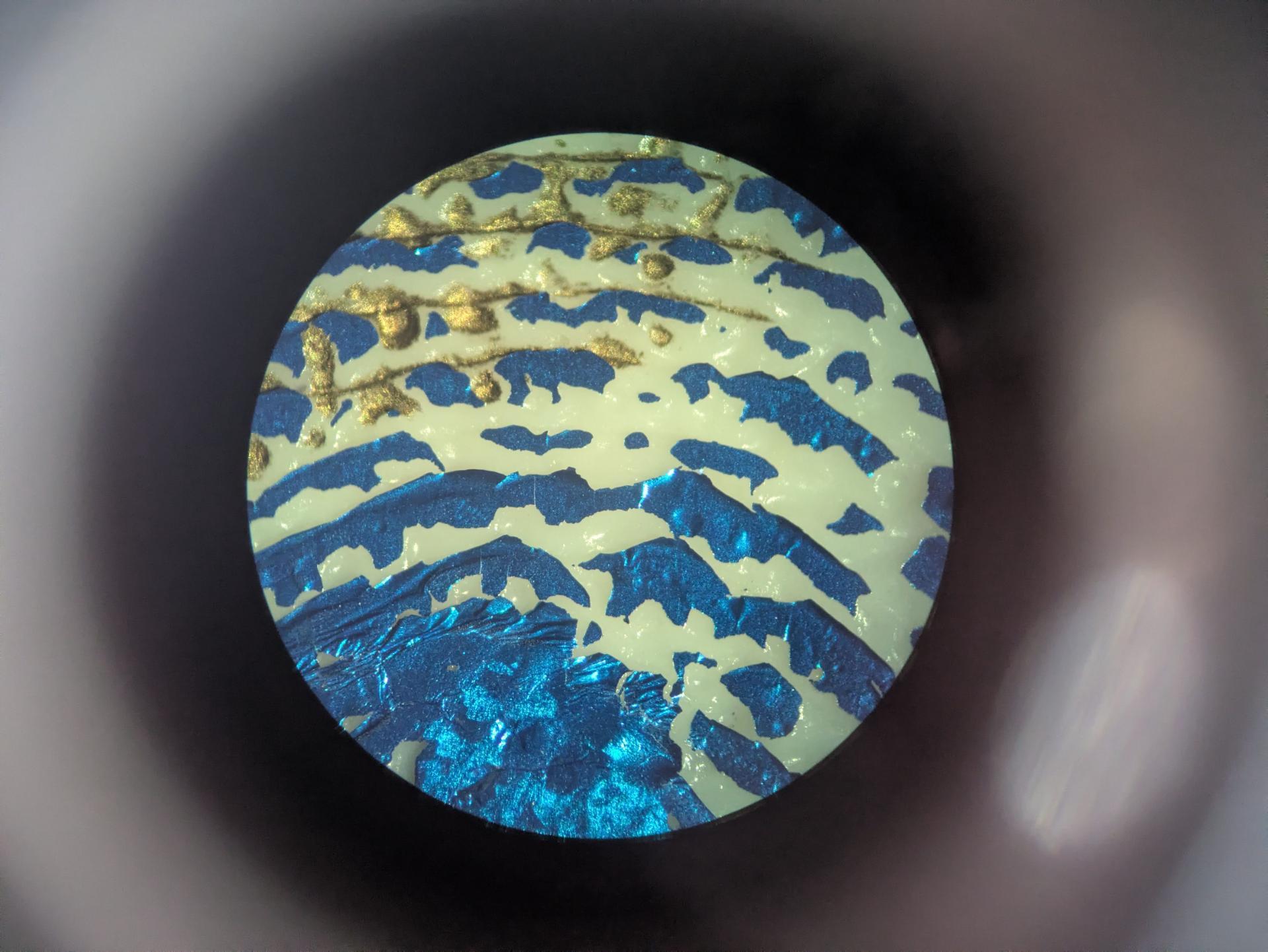
Cool iridescence with light as the right angle in these cells ๐ŸŒˆ diffraction effect I assume. Edit: see https://journals.asm.org/doi/10.1128/aem.07339-11 figure 4 for good comparisons

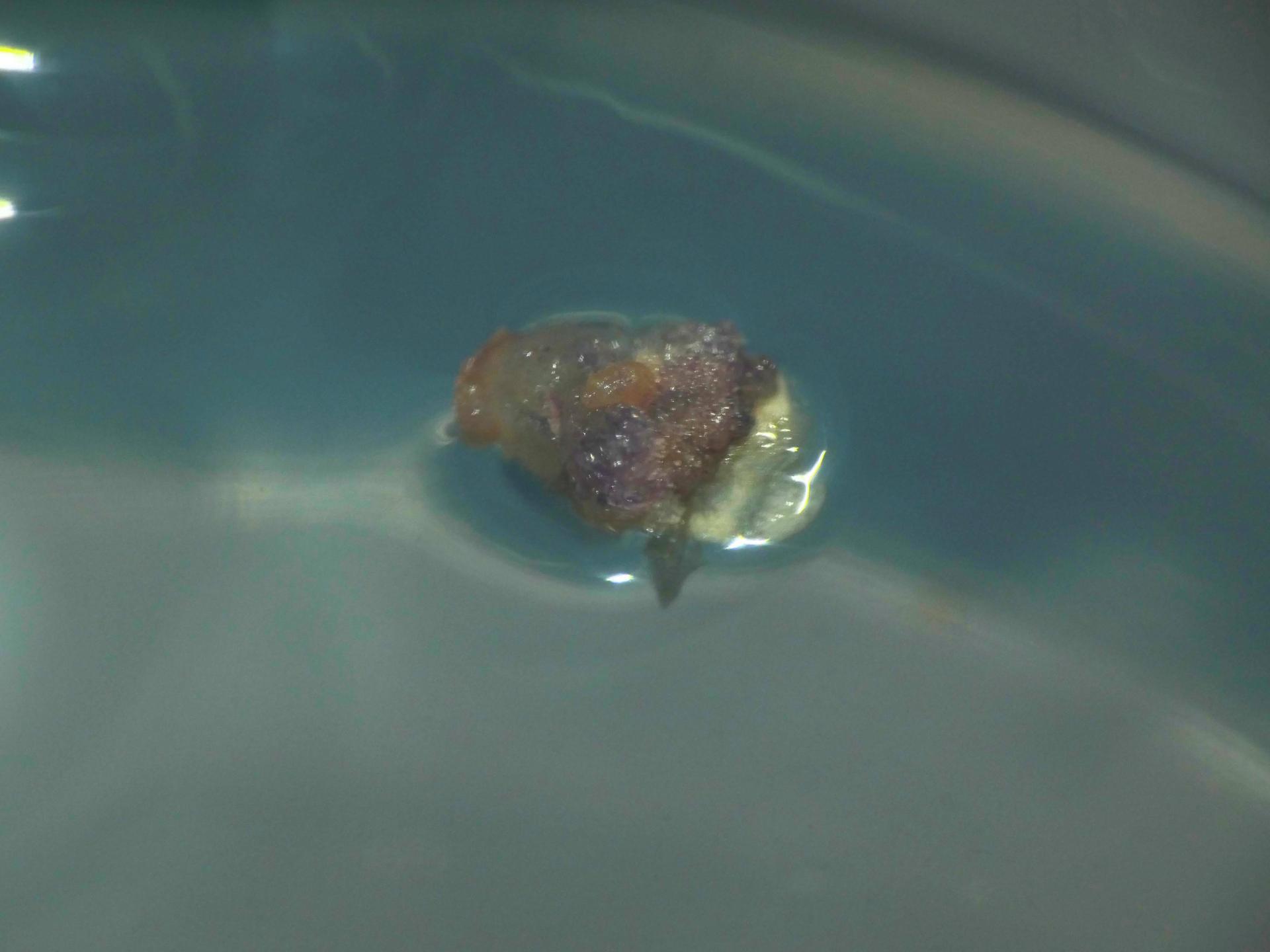
Orange environmental yeast, green attempt #3

Permalink

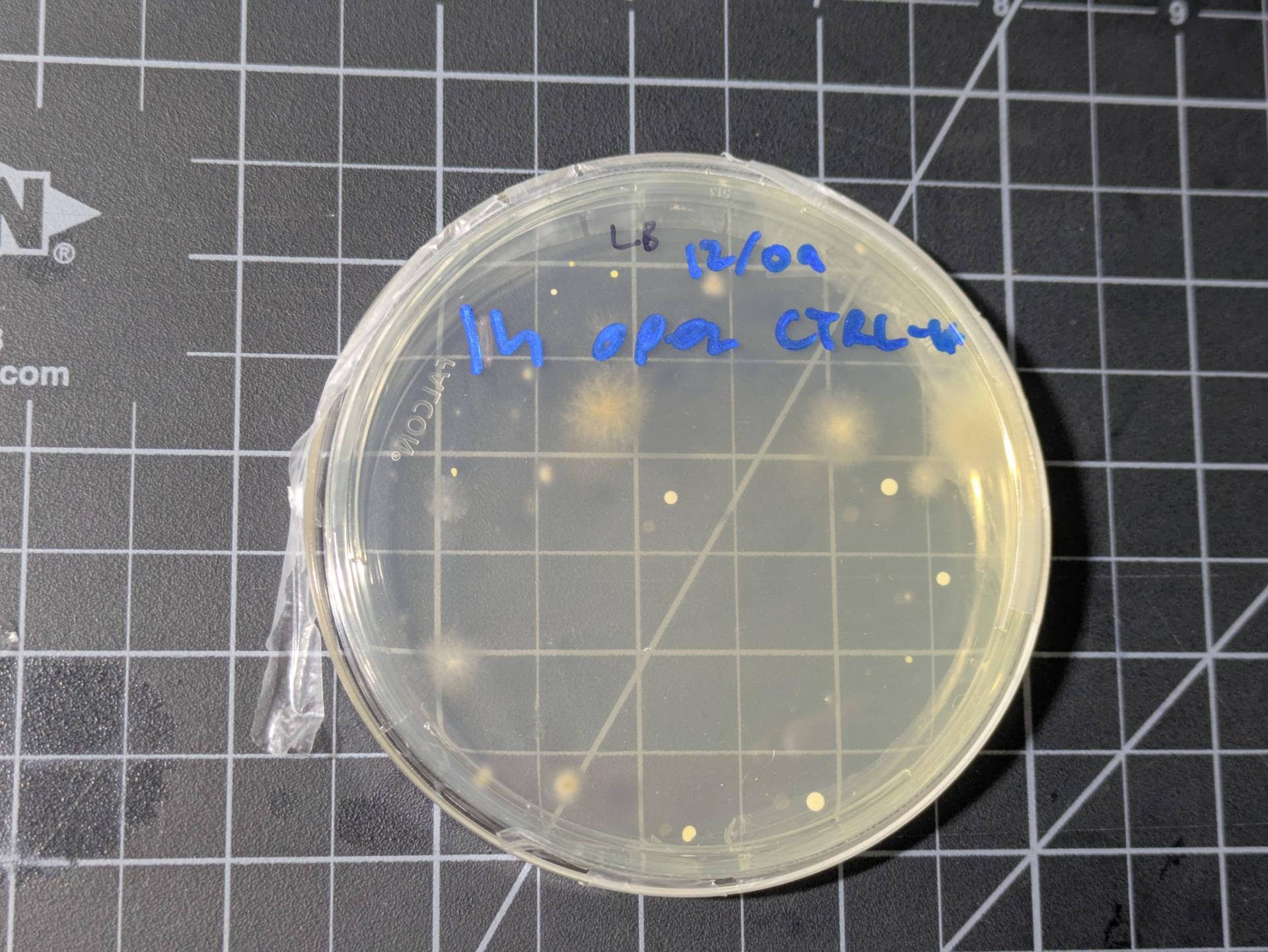
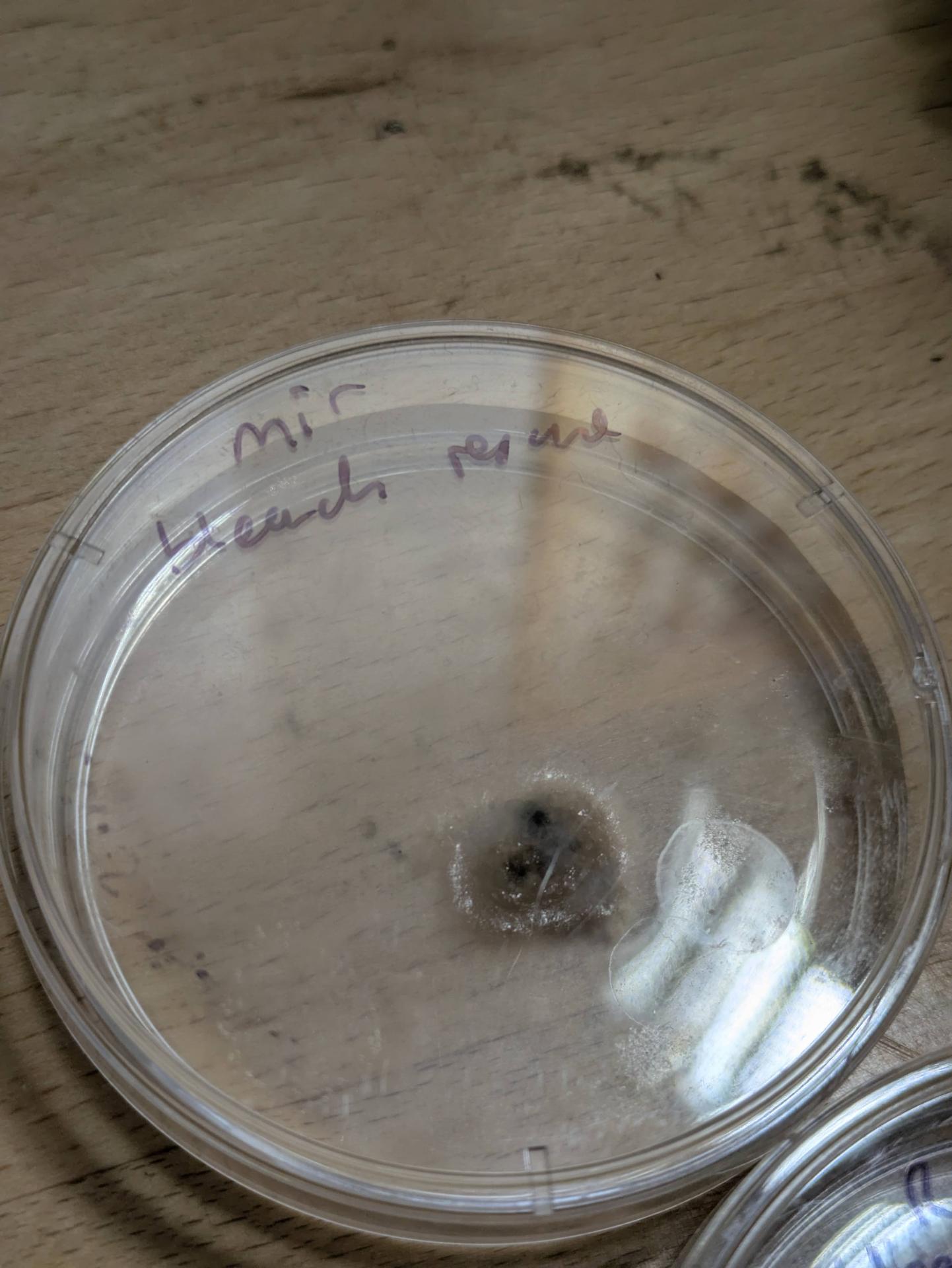
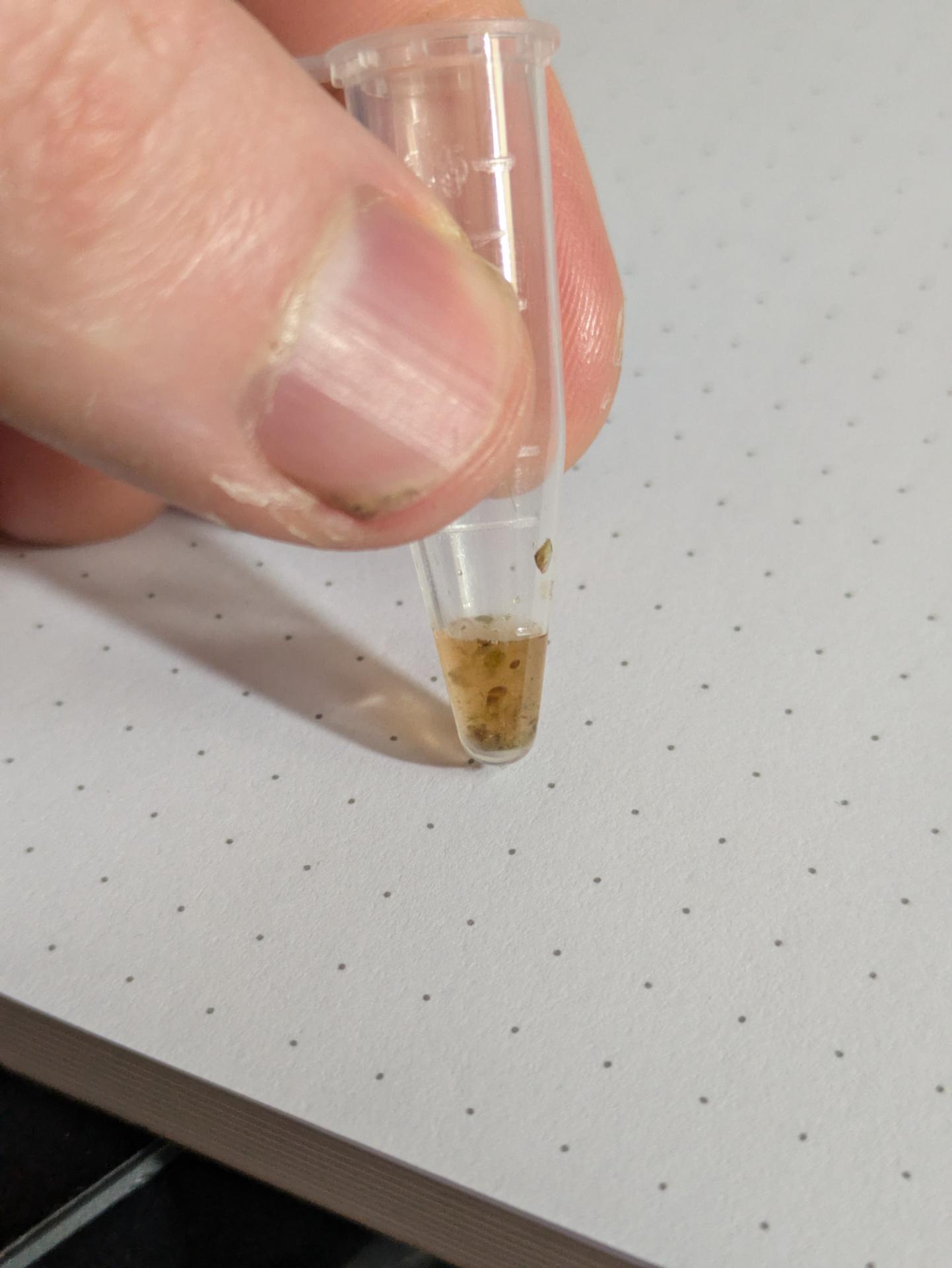
I've isolated a nice orange yeast that was growing on a neglected old plate.
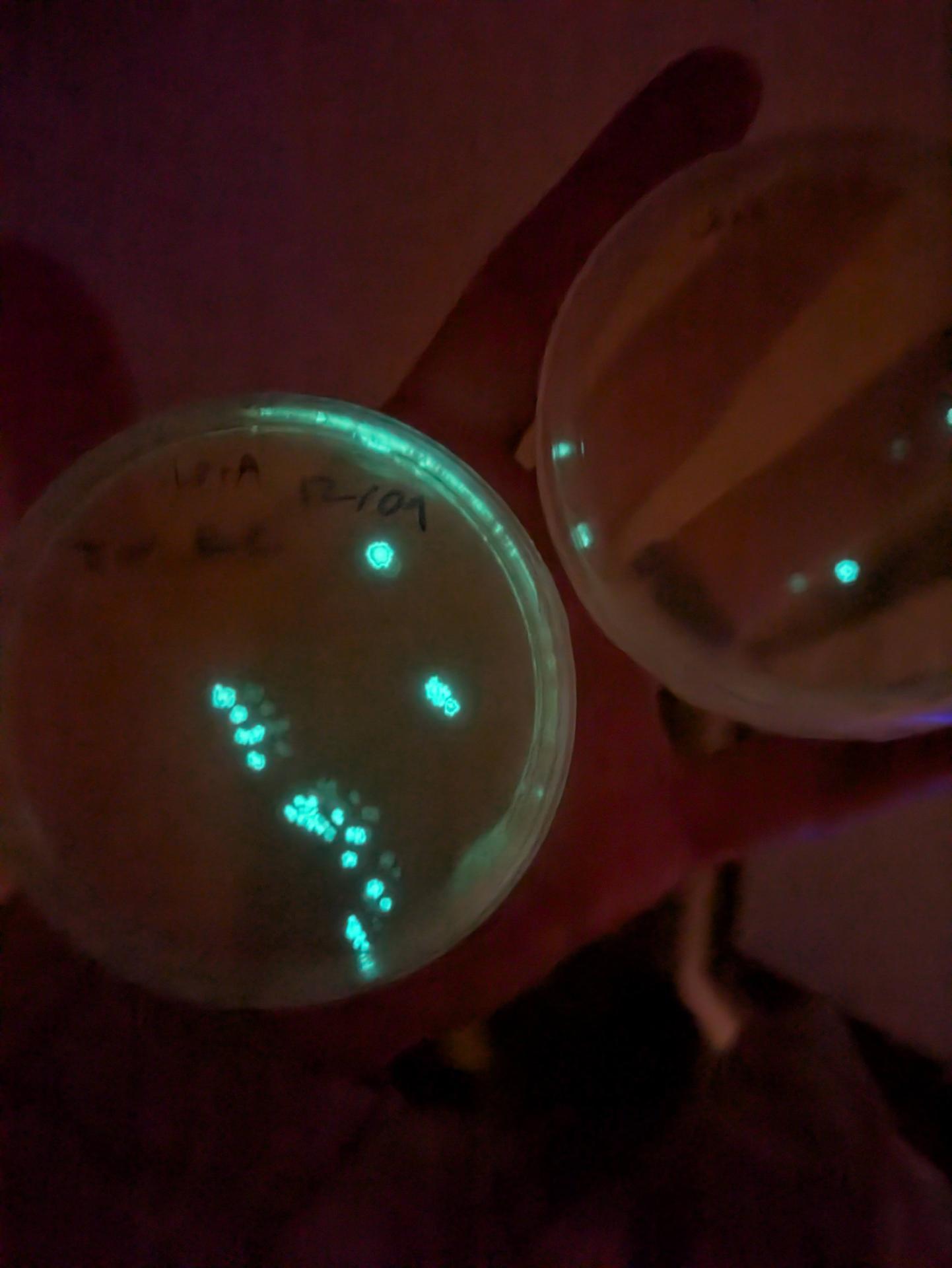
I received my third plasmid design, another attempt at green. I streaked some out from the glycerol stock they provided yesterday, but this morning noticed only a few small colonies at the start of the streak... and then realized: I had forgotten to change the vector from the default (pUC57 with ampicillin resistance) - not the kan-resistant vector I wanted! Ah well. I have some old AMP plates in the fridge from last year, which I've streaked it out on, and if those are too old I'll make up some more with my last few uL of AMP solution. And then think about subcloning into a kan vector to match the other colors perhaps? Or just make art on plain LB and rely on them all not losing color too fast.

Unsuccessful gene gun carrot

Permalink

Shot some carrot callus in TC and a strip of carrot. Only one red spot which scraped off, something besides a transformed cell I suspect. And the callus got pink yeast growing on it. (I left it on air purifier overnight to dry because of family stuff, assume contam from that)

Transformed Duckweed

Permalink

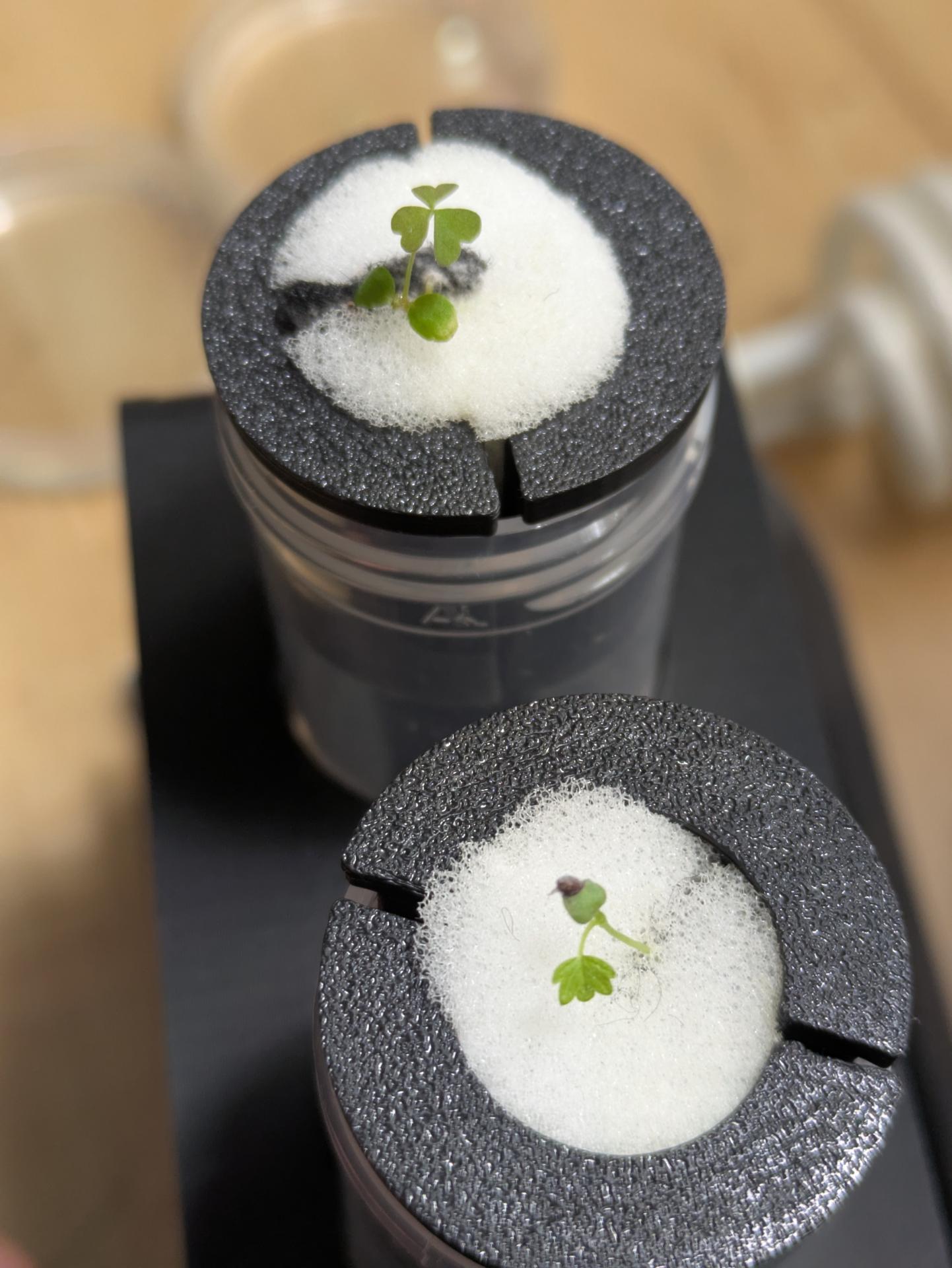
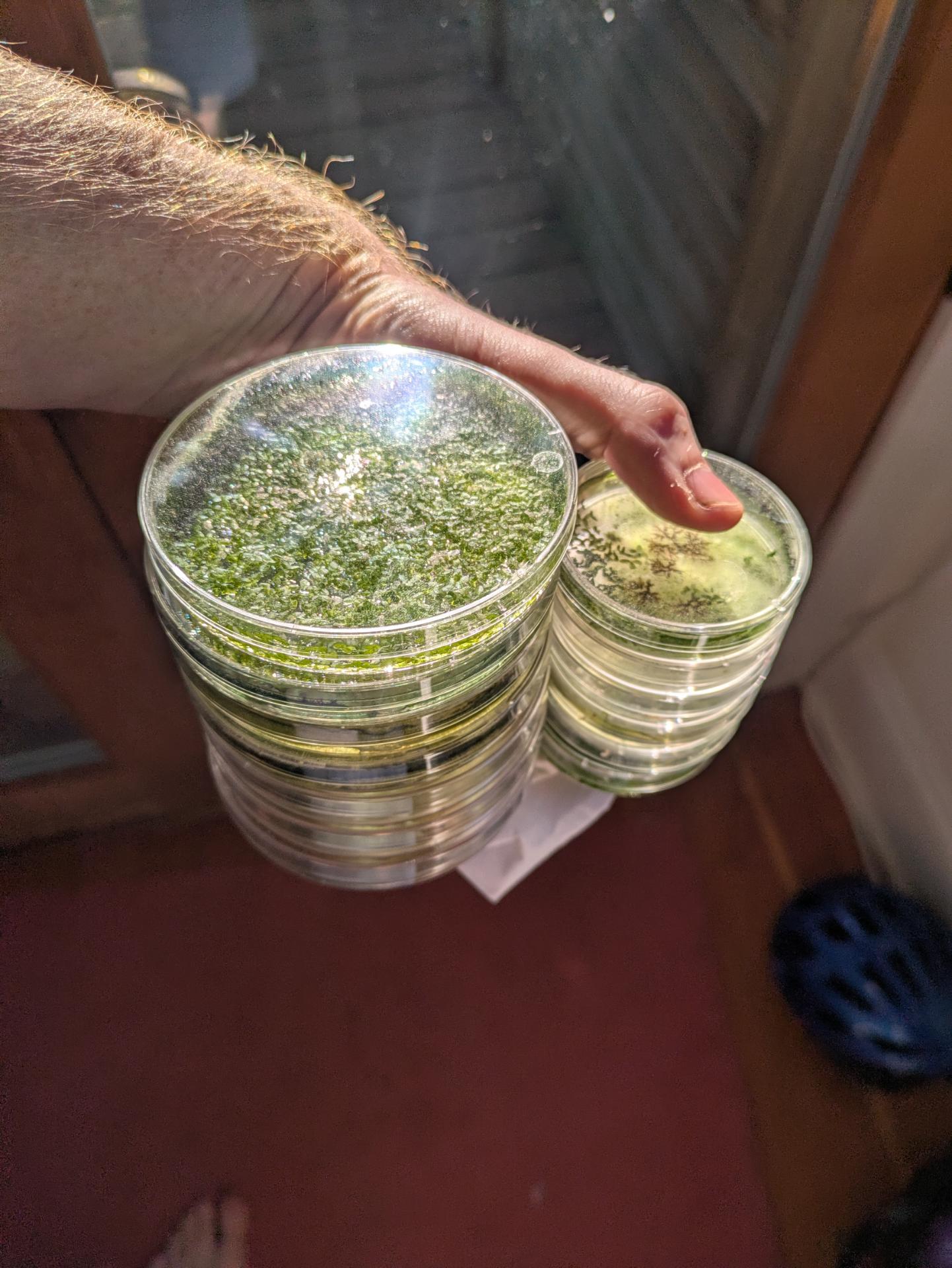
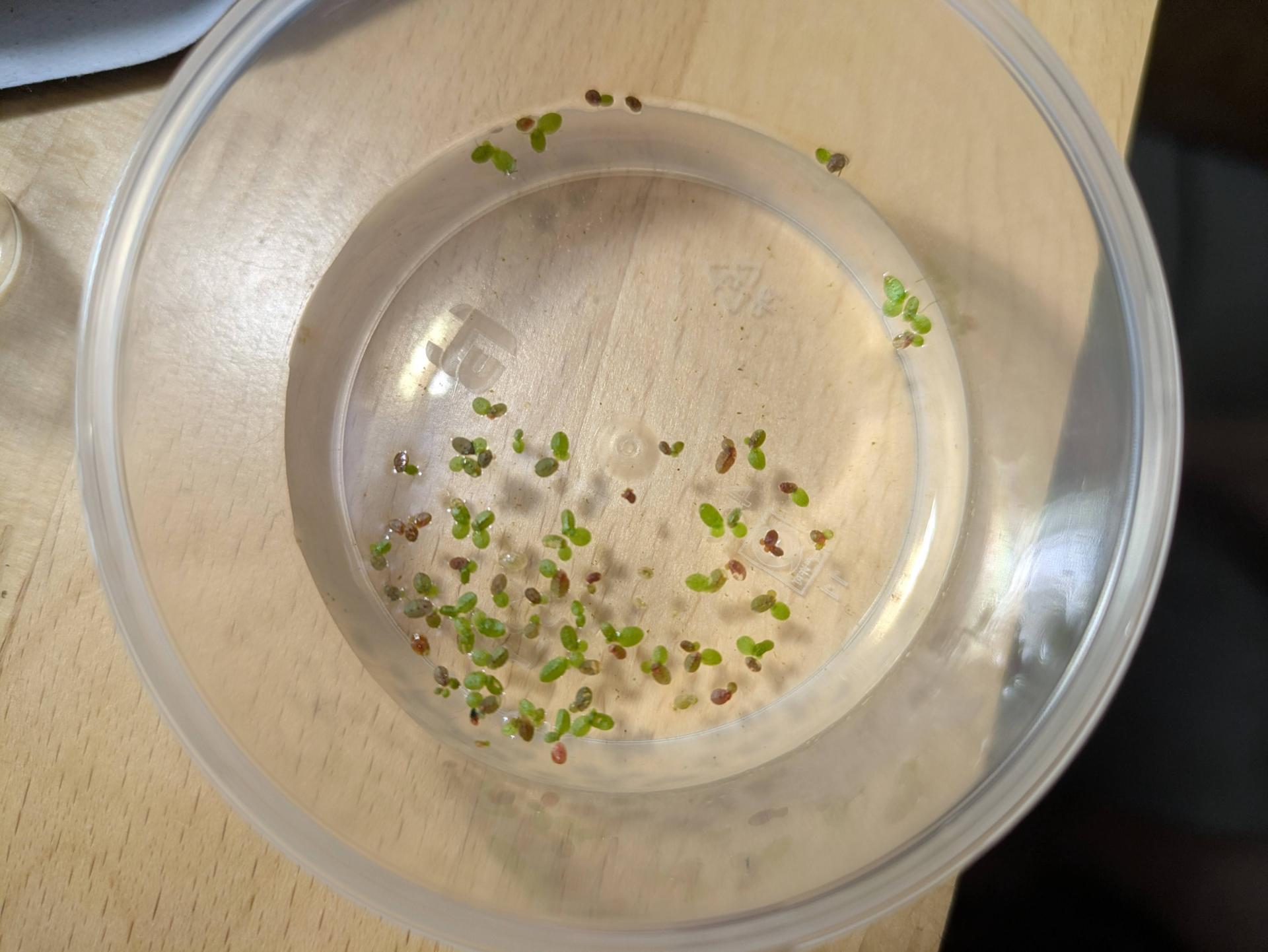
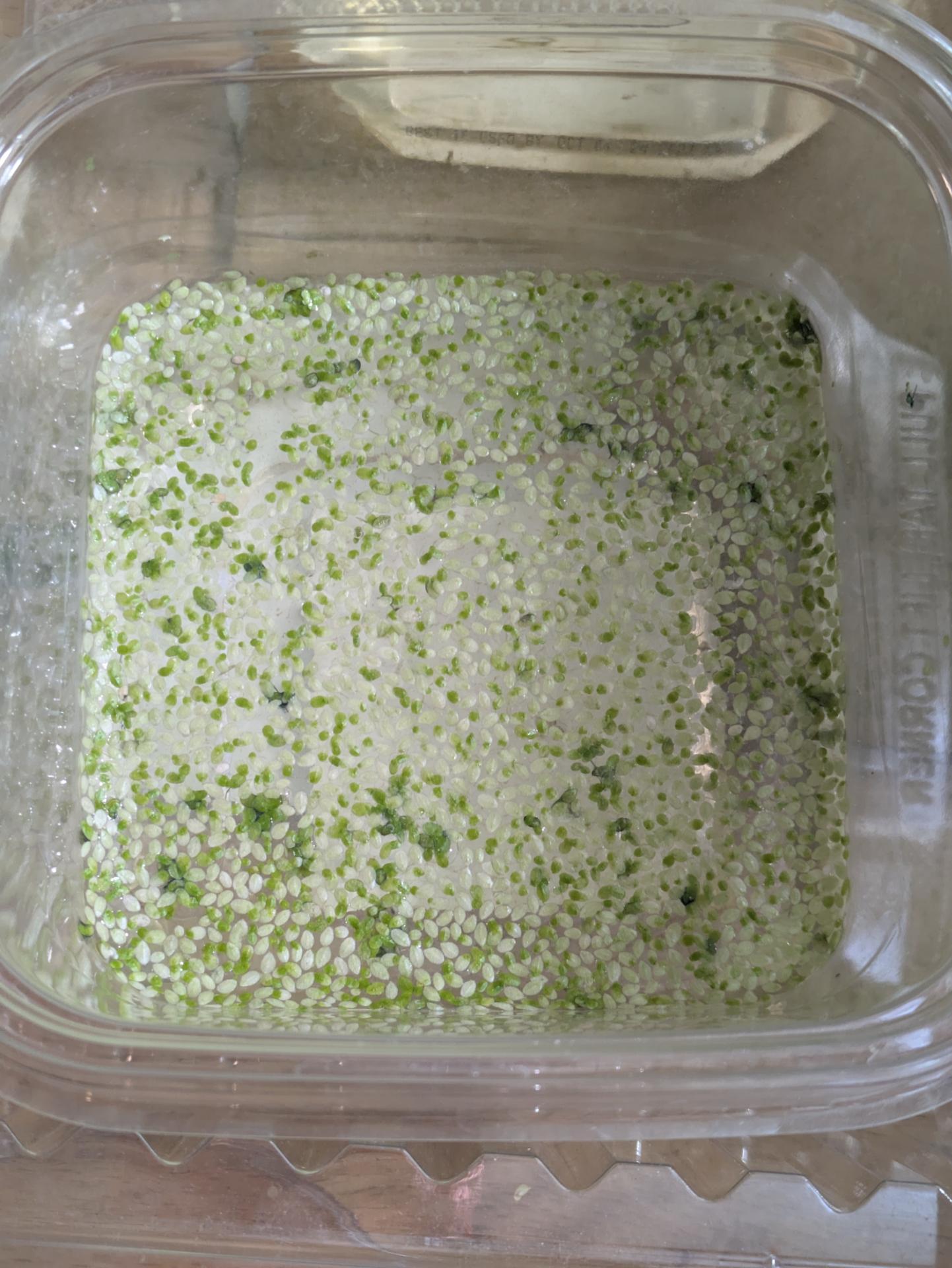
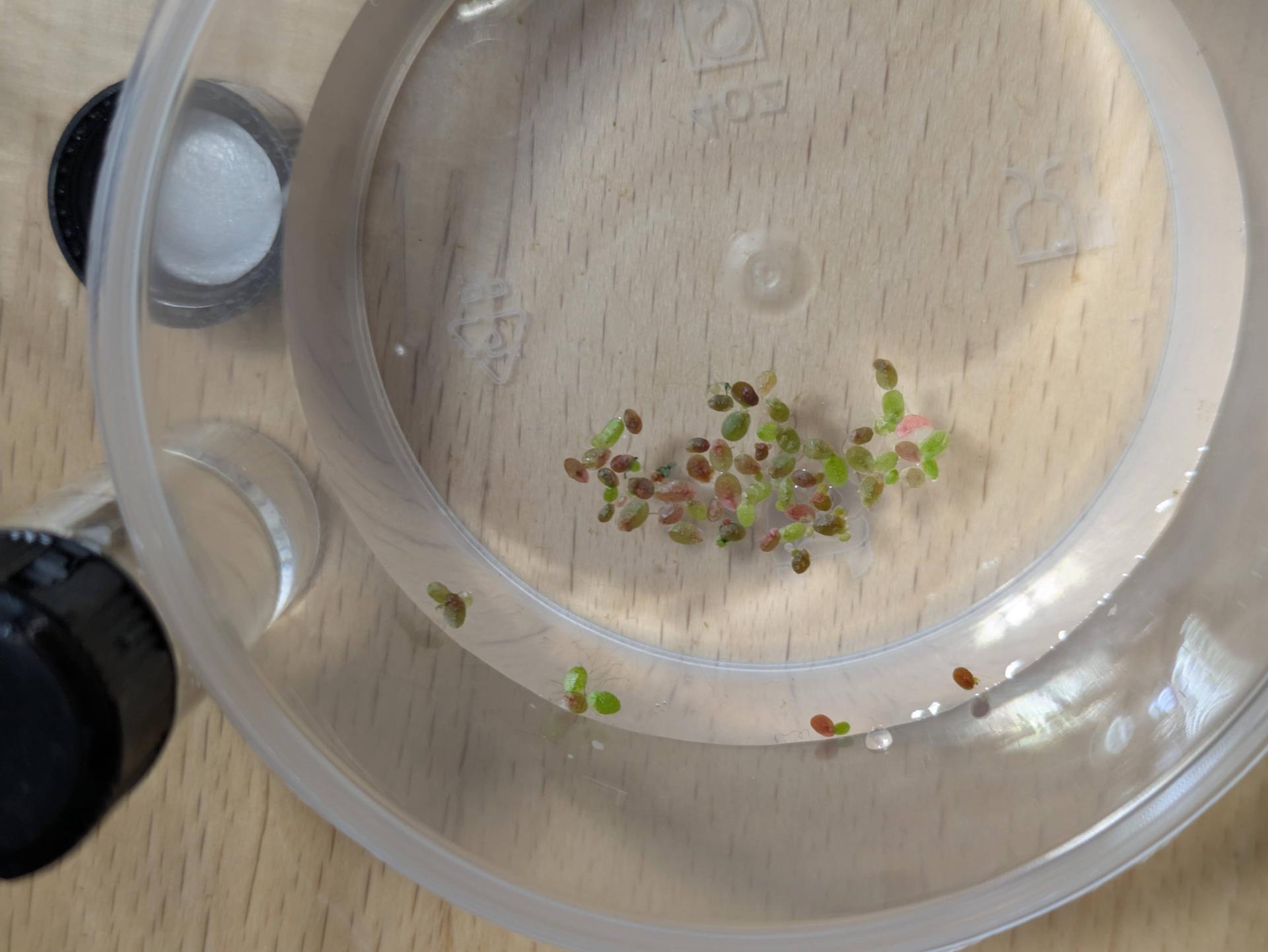
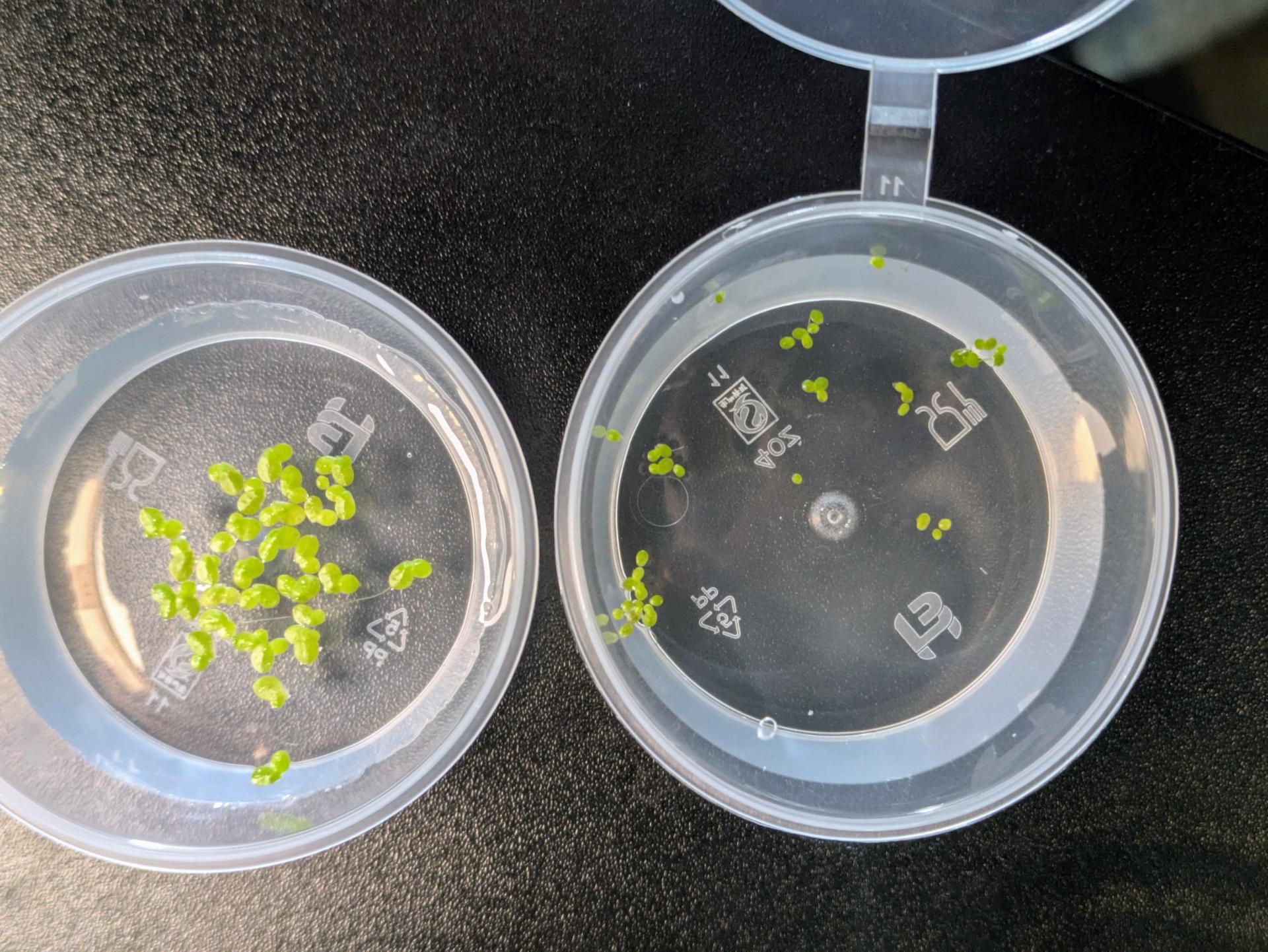
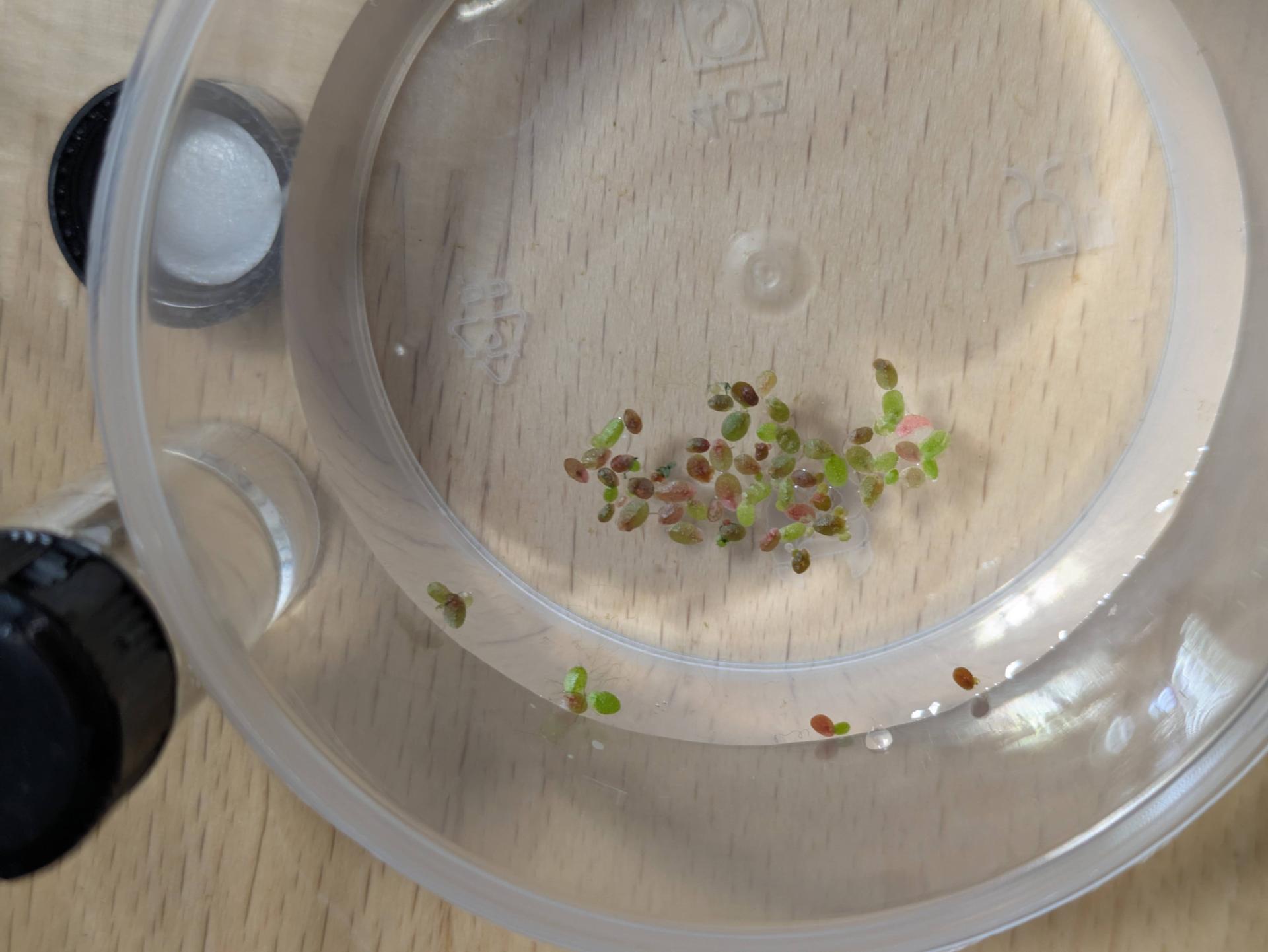
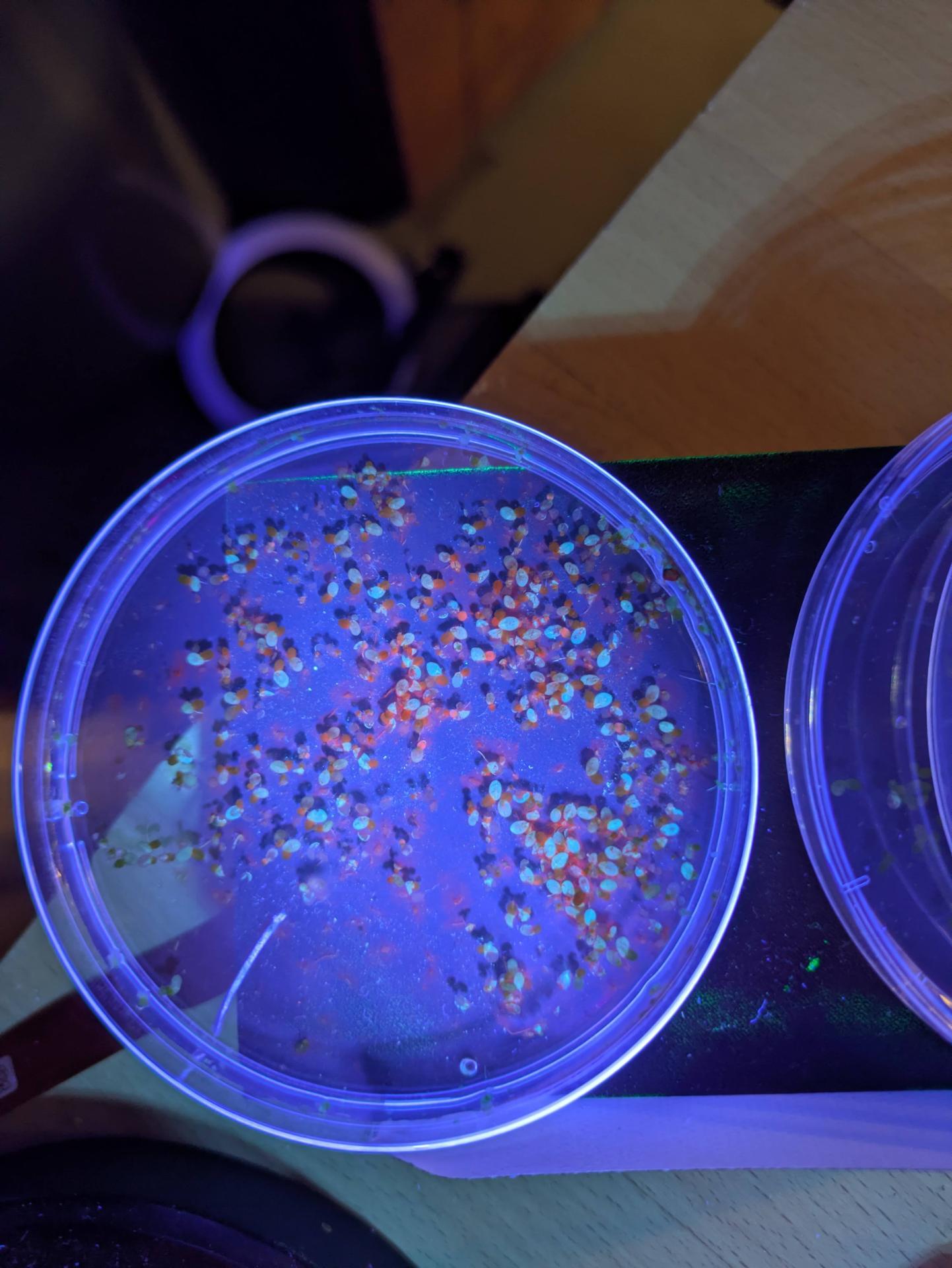
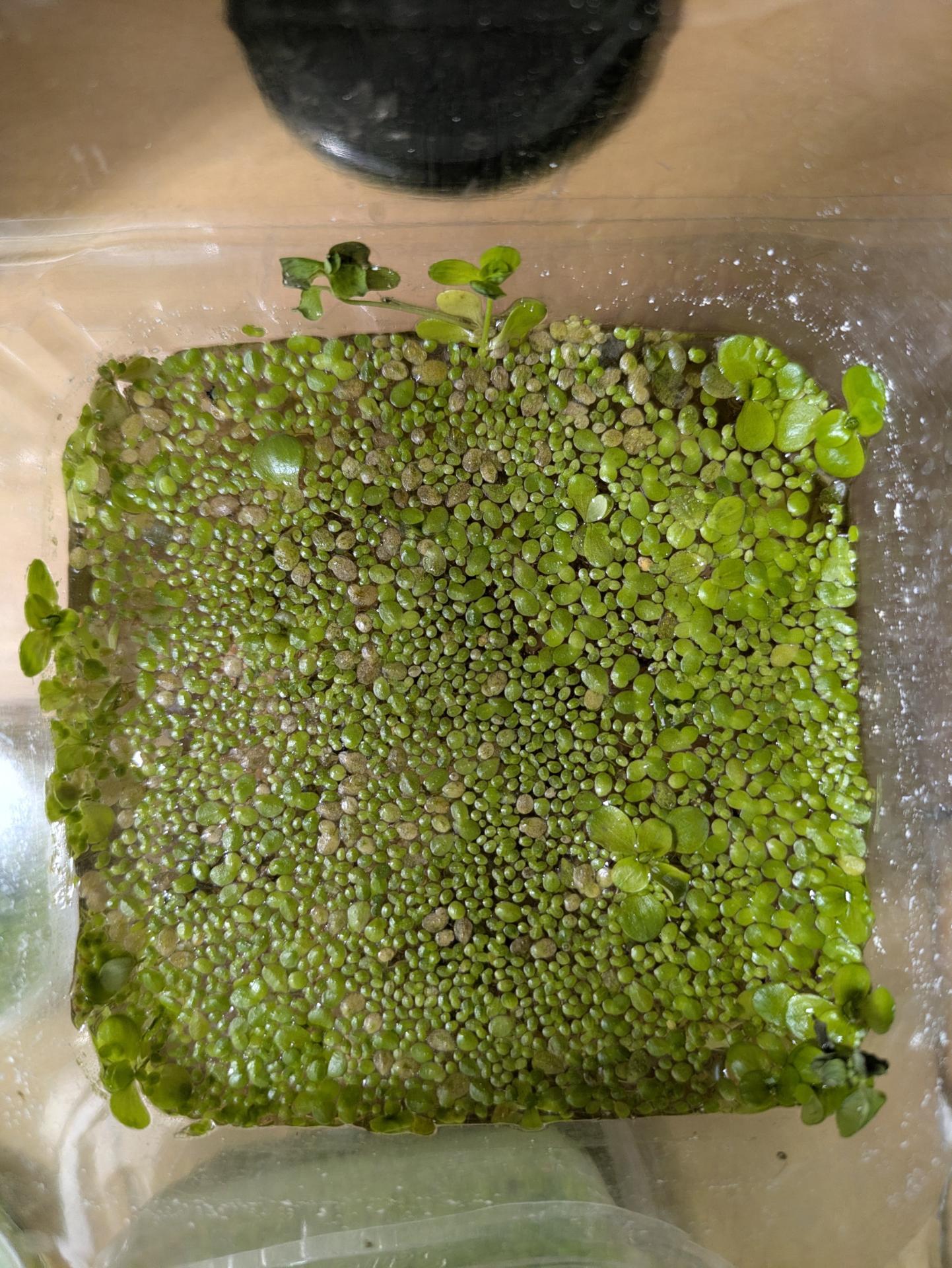
More pics of duckweed with RUBY, transformed with agrobacterium. I still need to try a fresh attempt, planning to split them in hopes of transforming more meristems, but even the rough and ready way I did these at least yields some partial transforms and a couple of fully transformed bits! Hopefully over successive generations we can weed out the mosaic mixes and get pure, but if I can up the initial transformation efficiency that'll help. How these were done:
- Agro + tfm mix in a syringe
- Add some dwe fronds
- Pull back and release plunger a few times
- Rinse a few times
- Into nutrient mix to recover + grow
- Wait.

Ruby???

Permalink

Inspecting the leaf I shot with DE + CaCl2 + RUBY DNA has a few tiny red spots, hopeful???

Biliverdin diffusion

Permalink

Well, I tried growing out the e.c. with my biliverdin plasmid. No obvious color in the colonies (maybe a little more yellowish than normal?) but the agar over time has shifted color. I think as I feared the biliverdin is diffusing out, and it's more bruise-brown than obvious green in the LB agar. Might need to try operation treefrog.
Also, this is growing out the cloning strain I got from genscript. The plasmid DNA tubes they sent looked empty, with the dry ice I suspect the DNA was freeze-dried in the (no parafilm) tubes. I added sterile water, and tried out my spec method to see if DNA was present, seems like probably? I did a transform but got one (1) colony so something funky going on. Next trying liquid culture of the stuff I already have, and leaving things for longer to see what happens.

More gg tests

Permalink

Trying 10ul slurry, 10ul CaCl2 soln, 2ul DNA, letting dry, with both de slurry and graphite. Tried into tobacco leaf and also duckweed

Misc

Permalink
  • Gene gun tests with graphite into leaves -> no ruby I can see, killed a lot of the leaf in the center of the blast. Tungsten needle tatoo vibe also killed the tissue. In onion, I got a couple of ambiguous reddish bits, not sure if TFM and RUBY expressing or something else.

I got my biliverdin plasmid delivered today, TIL if you pay $10 extra for glycerol stock you get a buttload of dry ice with it, made a janky cloud chamber and watched some rays, had fun with the baby playing with bubbles, blew the lid off a tub a few times :D

Got a taser but at 25kV it's a bit too powerful for electroporation, need to come up with a plan for that.

Pouring some plates and making some stabs now.

Quantifying DNA (test)

Permalink

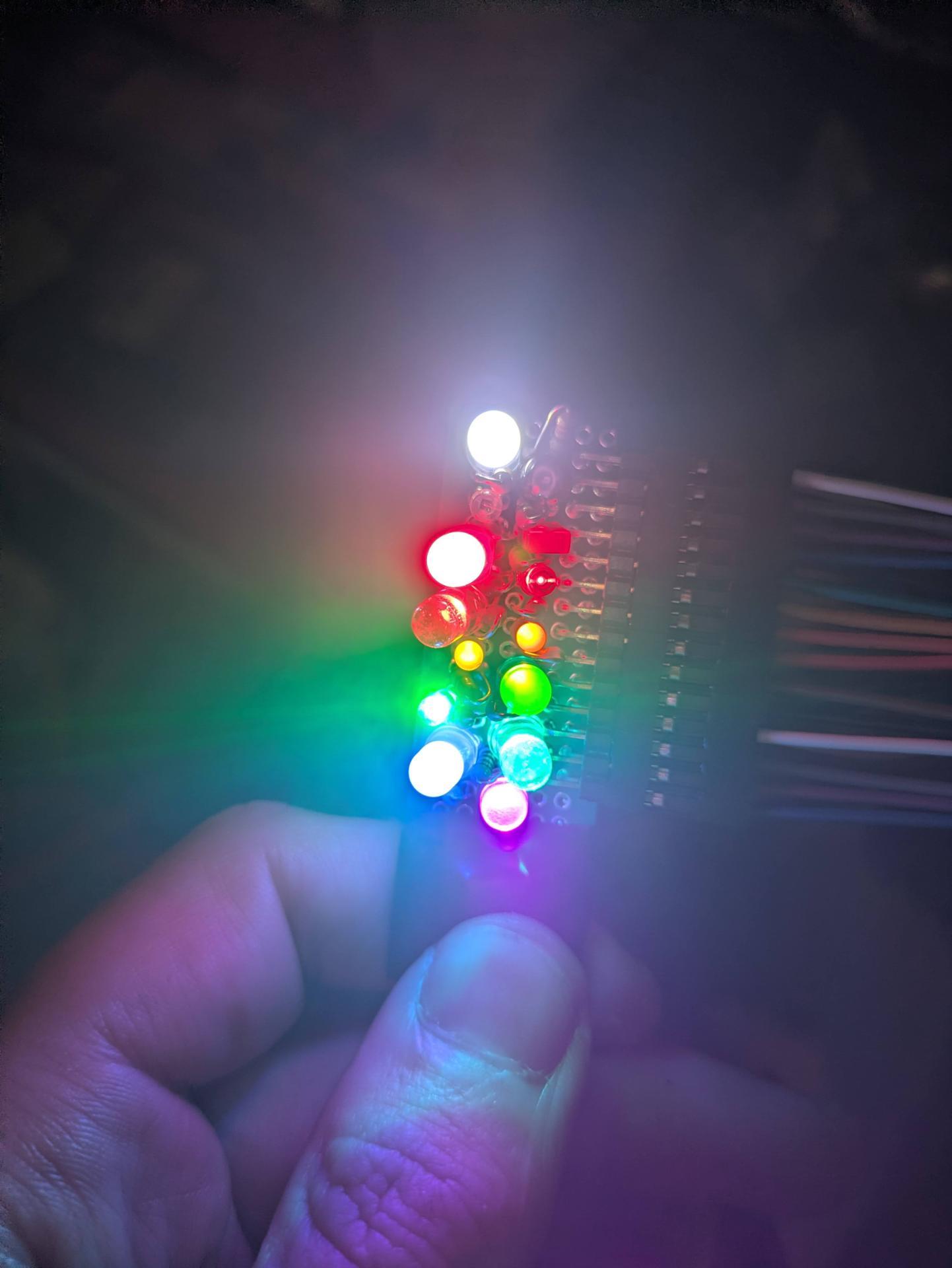
Shining a blue LED into 100uL of
- SeeGreen DNA stain (2ul in 20ml)
- with 1uL of soln of interest

Seems like uL (blank), w (water), 2 (an old agro miniprep attempt) have very little. spB is an aeBlue mini-prep test, s3 was my final pB practice run, and uR is my RubyGreen mini-prep that actually matters. s1 is 10ng/uL (too weak to see) and s500 is 500ng/uL approx (maybe some tube losses, could be 300 for all I know) of pBLY. Not at all calibrated, SNR is terrible, but I sliced it a few different ways and re-tested and uR always shows the biggest peak, don't think it's too far-fetched to say 30-70ug of DNA in the 100uL elution I managed to get! (in the mini-prep I used a big loopful of cells, filtered the stuff then ran 2 ~800uL portions of the filtrate through the column to maximise my chances, and eluted with 70uL then an extra 30uL (letting the latter sit a minute) to eek out as much as possible.

Edit: re-ran more carefully, est DNA conc 687 ng/ยตL (90% CI: 507โ€“845), code here: https://gist.github.com/johnowhitaker/3aa41553b027c29d307766fcc06a79cf

Shooting DNA at things

Permalink

Trying graphite (powdered on 220 grit sandpaper, 200ul loose powder volume in 1ml water and mixed up as a slurry, 10ul as a drop allowed to dry) as a carrier, with 2ul DNA from the miniprep (dropped on then also allowed to dry). Shot various things plus a few no-dna control, yolo run but let's hope we get at least a glimmer of ruby in a few days time! For now, pie party. My melktert recipe:
Into a saucepan put:
- 3 Tbsp corn starch
- 2 Tbsp flour
- 1/2 cup sugar
- pinch of salt
- 1 tsp cinnamon
- 1 Egg
- (mix), (splash of milk), (mix), 4 cups milk
- (heat and whisk till thick and custardy, 5-10 mins)
- knob of butter, vanilla (1tsp)
Pour into graham cracker base from the store, dust with more cinnamon, cool to room temp, set in fridge a few hours.

Rg miniprep

Permalink

Miniprep on pCambria RubyGreen, think I got some DNA? Todo machine to quantify amt. Also planted plants a few days ago.
My 'fuge is weak so in the miniprep I use a syringe filter rather than spinning down after mixing all the things, and just give it extra time when sending stuff through the column. Also for this one I just scraped a big loopful of cells from the plate into A1 rather than growing out liquid culture

Tobacco TC tests

Permalink

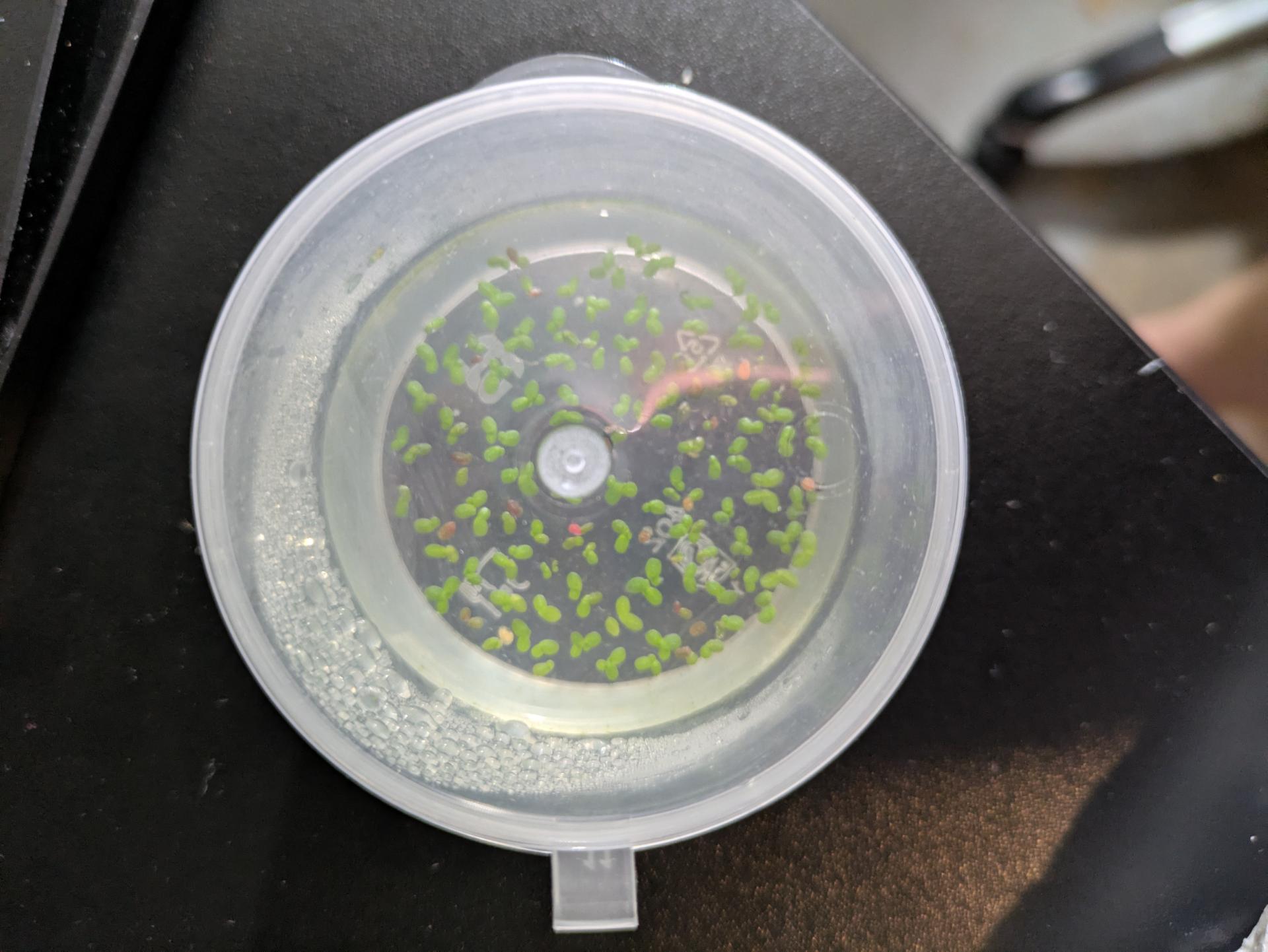
Cracking open some tobacco seed to TC tests I started in mid Jan. 3 diff media formulations.
Base media: 400ml water, 2g MS, 3.5g agar, 12g sugar. 25 ml / tub
Green: 25ug BAP, 3ug NAA (in 25ml)
Red: 6ug NAA
Clear: 25ug BAP, 6ug NAA
Seeds plated on clear, 3/tub transferred after a month or so.

Duckweed tfm

Permalink
Notebook page for 2026-03-03

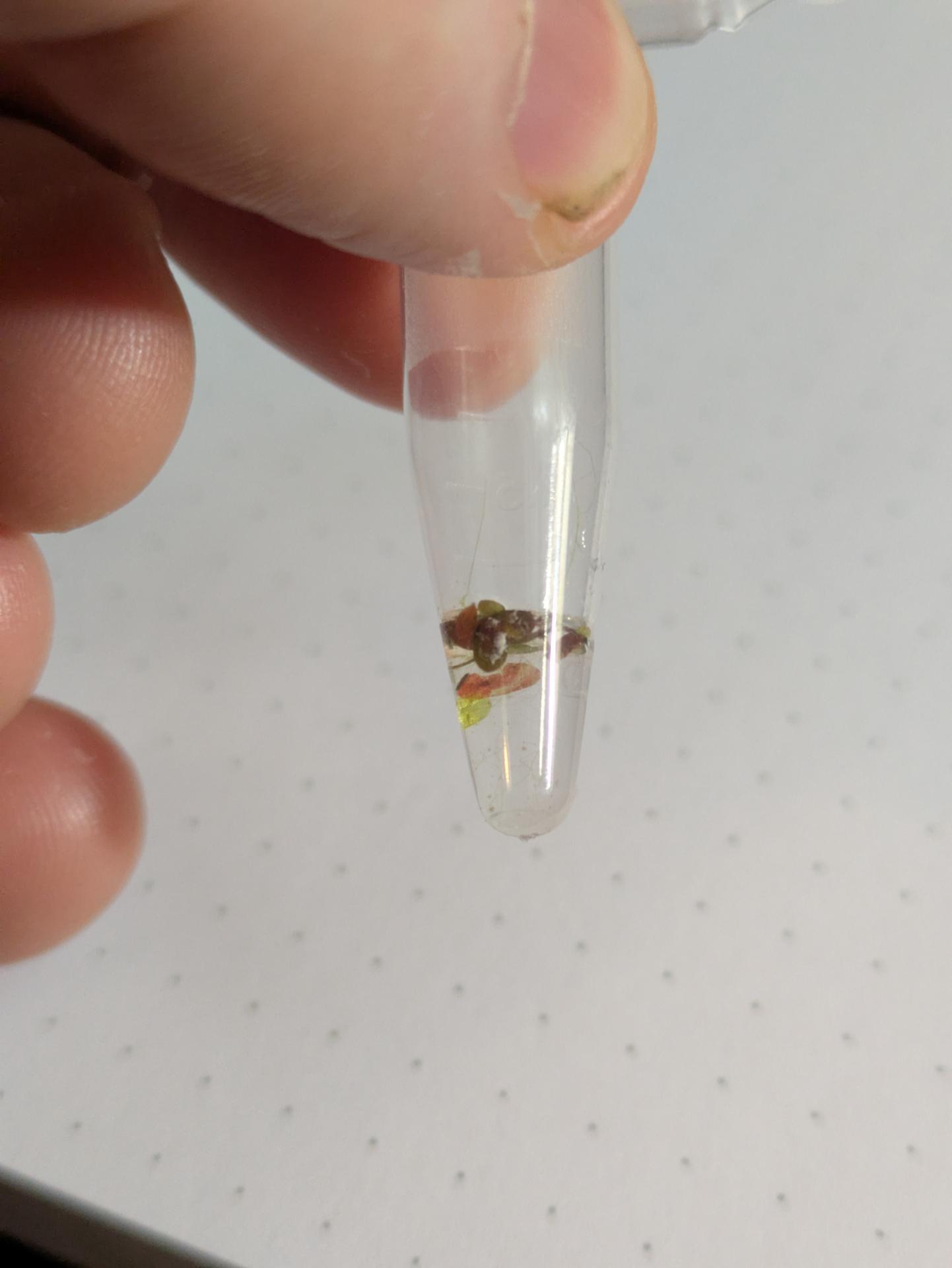
Attempting tissue-culture-free agro transform of duckweed (lemna minor). I ran a few diff exps this weekend, and more excitingly noticed a red frond in some that I'd tried to tfm on Feb 9th, hoping that means the meristem took in the genes and this is a properly transgenic new frond. Rough protocol:
- A loopful of agro into infiltration mix, in a syringe with some duckweed fronds
- Pull back plunger while blocking end, and release. The sudden vacuum+slam (in my head at least) helps push agro into the interstices of the fronds.
Will share more depending on how more recent tests go.

Misc

Permalink
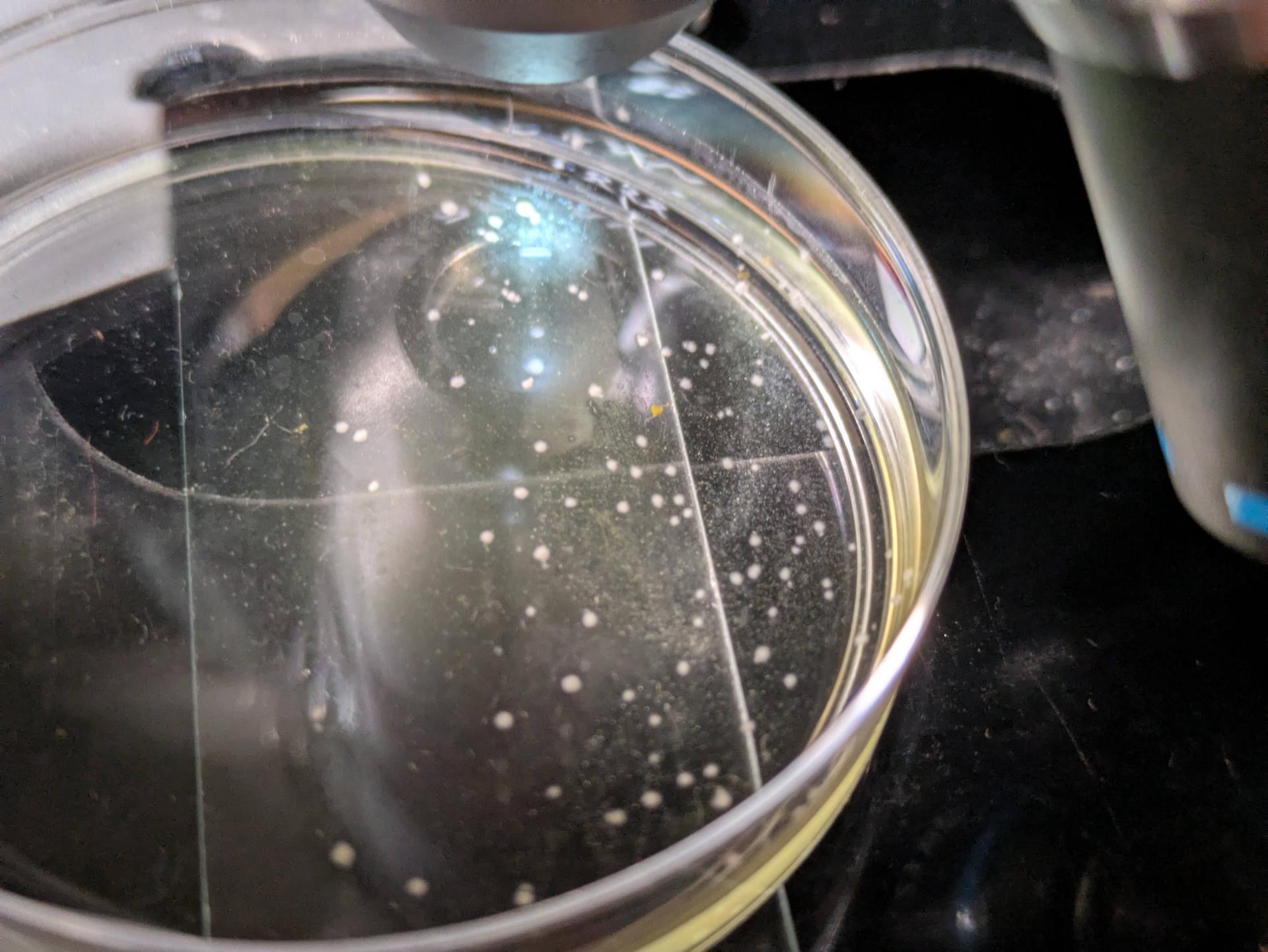
  • a couple of colonies visible by this evening on the electroporation plate(s?). Will evaluate tomorrow.
  • went down the rabbit hole of DVD OPU microscopy options, AFMs, flexures etc again
  • modelled and am printing bits for a nicer spectrometer

Electroporation take 3

Permalink

New run:
- Pseudomonas in liquid culture for ~18h
- Spun down, removed supernatant, add 10% gly (in 1.5ml tube)
- Spun down, removed supernatant, add 10% gly
- Spun down, removed supernatant, add 30uL of 10% gly (pellet by this stage was pretty small given my weak 'fuge)
- Added 3uL DNA (from a mini-prep I did yday, aeBLUE on a kanamycin resistant backbone)
- Did this in two tubes. One got 1.2mm gap, one got 2.4mm. 10 zaps each. On the 2.4mm gap, peak was ~5V (~10kV/cm). On the 1.2mm gap I didn't get a clear voltage reading, not sure what went wrong.
- 1h in 200uL LB broth @30C to recover before plating 100uL on Kan plates. Now we wait. Only worry: cells might have been stationary phase, might try a repeat with fresh culture in a few hours.
DNA after all?

Permalink

I ran another mini-prep, although since my centrifuge is funky I used a syringe filter after the precipitation step. Then to see if there is DNA there, I added 2uL SeeGreen stain to 20ml water. I add 200uL of this plus 2uL of my samples: known DNA plasmid at 10ng/uL, miniprep from ag, miniprep from ecoli last time, water (W) and the latest product, this time from liquid culture, e.c. with pBLUE. Did this first in micro centrifuge tubes and couldn't see anything past their own blue scatter/fluorescence. Transferred to glass vials and bingo, finally, a difference between the water and the others. I need to take some better pics, but it looks like they all contain DNA after all! And the color makes me think my fears when I ran the gel and saw the orange clouds were founded: the DNA prob just washed out of the wells. TIL add buffer first! As I was pouring the buffer I noticed surface tension or whatever meant well 3 was the last to fill, at which point I stopped pouring, prob why it was the only one that showed bands. Other likely contributing factor is my wimpy centrifuge not getting rid of as much residual ethanol from the DNA wash buffer during the miniprep, which can make it floaty. Anyway, at least I think I have DNA aplenty now to test electroporation and such with! Maybe in the future I'll build something nanodrop-like to quantify conc. or find a lab with one.

Daily Entry

Permalink
Notebook page for 2026-02-19

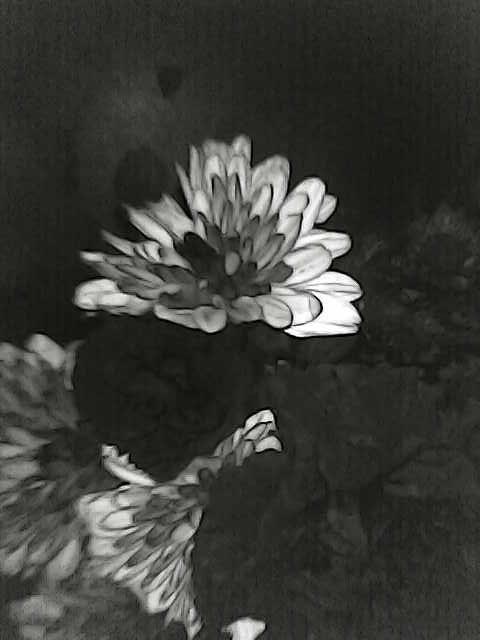
I was killing + throwing out a primrose used for testing, and there was one nice flower left, so I stuck the stem (split) into some water with highlighter fluid added. After some time, glow under UV spreads to the petals.